
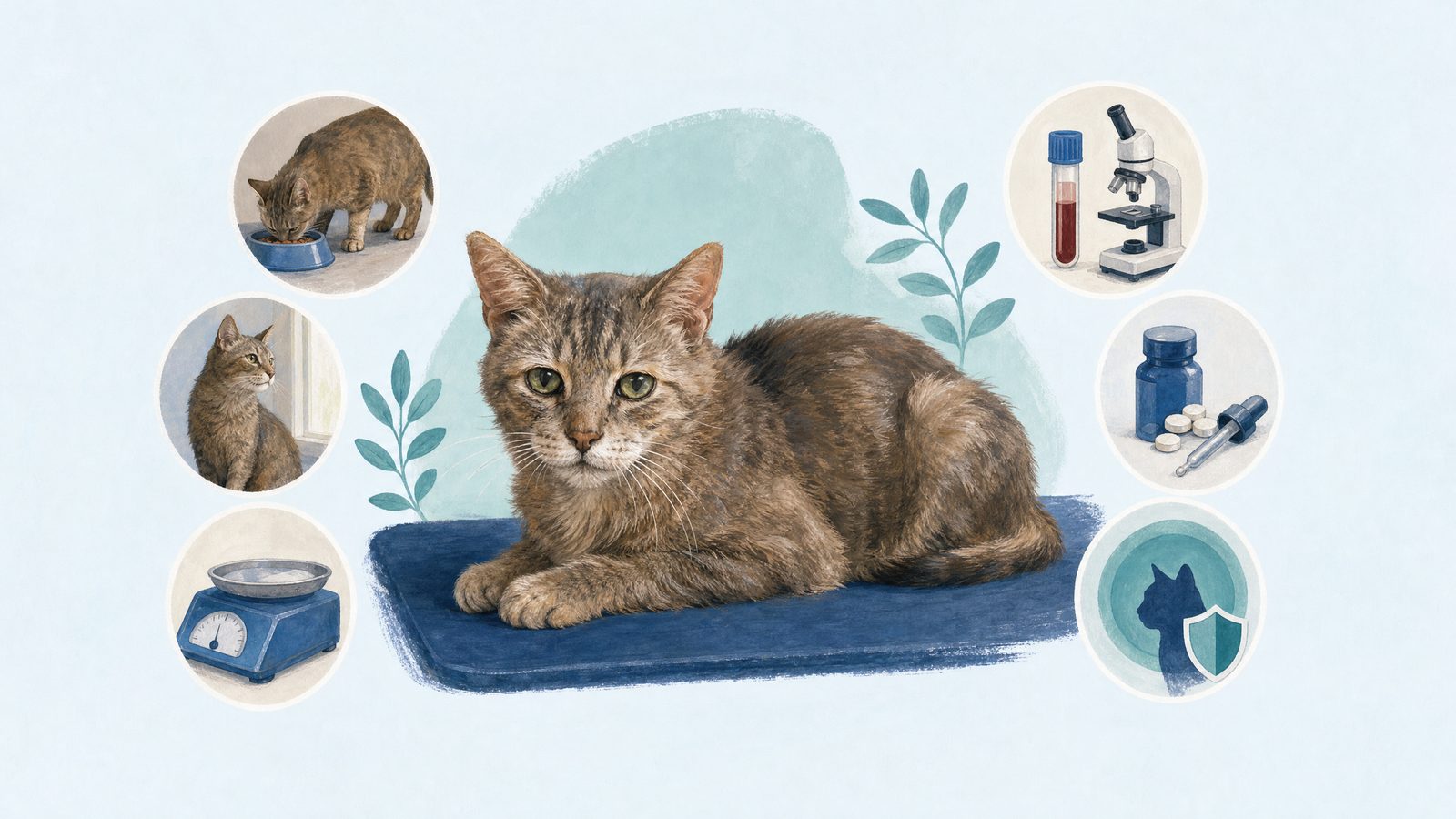
An older cat that loses weight despite a strong appetite needs an examination. Hyperthyroidism is one possible cause, but other illnesses can produce similar changes. Early investigation helps your veterinarian assess the thyroid and the rest of the cat's health together.
What the thyroid does
Thyroid hormones help regulate metabolism. Hyperthyroidism means the body is exposed to too much thyroid hormone, usually because thyroid tissue is overactive. It is different from hypothyroidism, in which thyroid hormone levels are too low.
The condition often affects middle-aged and older cats. An increase in activity is not always a sign that an older cat is unusually healthy, particularly when it accompanies weight loss or changes in appetite.
Changes to report
Tell your veterinarian about increased hunger, weight loss, restlessness, vomiting, diarrhea or changes in thirst. Some cats have a less typical presentation, so the absence of a dramatic appetite increase does not rule the condition out.
Bring weight records if you have them, along with a list of foods, medicines and supplements. Mention changes in grooming, sleep and vocalization. These everyday observations can help establish how long the problem has been developing.
Diagnosis and other health checks
The veterinarian uses the examination and blood testing to investigate thyroid function. Additional testing may be needed when results and signs do not fit neatly together. Kidney function, blood pressure and the heart may also need assessment.
Ask what each result means and whether further testing is needed before choosing treatment. Thyroid disease can interact with other health problems, so treatment is not just a matter of selecting a medicine from a list.
Discuss the available options
Options may include antithyroid medication, radioactive iodine, surgery or a carefully managed iodine-restricted diet. Suitability depends on the cat, access to treatment and the household's ability to follow the plan.
Medication requires monitoring and can have side effects. A therapeutic diet must be used under veterinary direction and may require strict control of other food sources. Radioactive iodine involves a specialized facility and specific aftercare instructions. Ask about the benefits, limitations, costs and follow-up for each realistic option.
Follow-up is part of treatment
Record appetite, weight, energy and any new symptoms after treatment begins. Keep scheduled blood tests and rechecks, even when your cat seems better. Contact the clinic promptly about adverse effects or difficulty giving treatment.
Do not change doses or attempt an iodine-restricted homemade diet on your own. A plan that balances thyroid control with the cat's other needs can be adjusted as new information becomes available.