
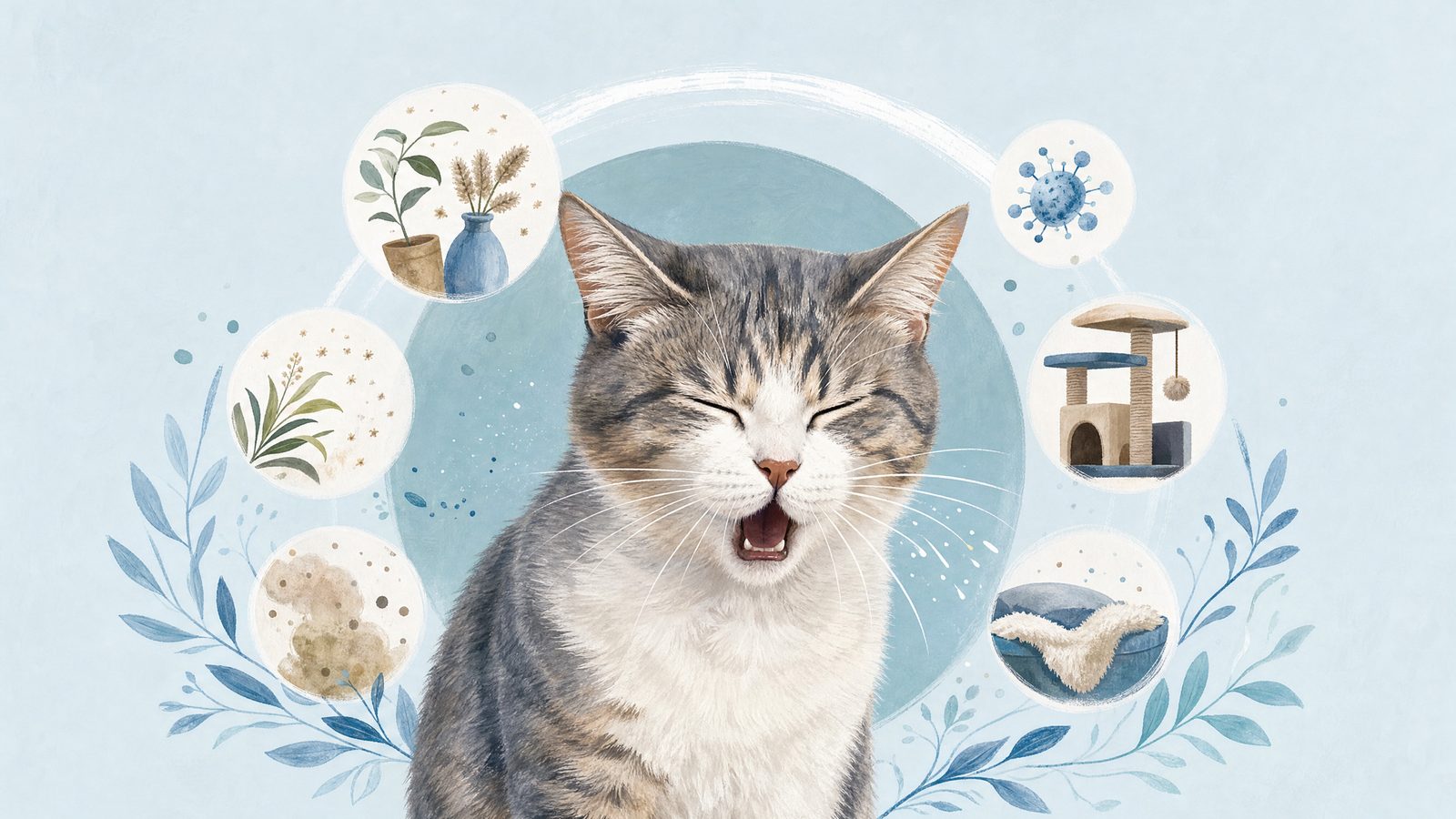
A single sneeze can follow a brief irritation. Repeated sneezing, discharge or a change in how your cat feels deserves a closer look. Pay attention to the whole pattern rather than the sneeze alone.
Notice the surroundings
Smoke, scented sprays, dusty litter and some cleaning products may irritate a cat's nose. If sneezing follows use of a product, move your cat away from the exposure and follow the product's pet-safety instructions. Keep rooms ventilated without exposing the cat to unsafe conditions.
Do not spray fragrances near your cat to cover an odor or use essential oils as a respiratory remedy. If a suspected exposure is followed by illness or difficulty breathing, contact a veterinarian promptly.
Infections and other causes
Upper respiratory infections are one possible cause of sneezing, sometimes with eye or nasal discharge and reduced appetite. Dental problems, a foreign object and other nasal disease can also be involved. Persistent signs should not be explained away as a human-style cold without an assessment.
Tell the clinic about new cats, boarding, shelter exposure and vaccination history. Vaccines reduce particular disease risks but do not prevent every respiratory problem. Your veterinarian can explain whether other cats in the home need protection or separation while the cause is investigated.
Useful observations
Record when sneezing began and whether it occurs in bursts. Note discharge from one or both nostrils, any blood, eye changes, appetite and energy. A short video may help show the breathing pattern or sounds that are difficult to describe.
Avoid repeatedly wiping or handling a painful nose. Ask the clinic how to keep your cat comfortable while waiting for an appointment, particularly if congestion seems to interfere with eating.
When to get help
Difficulty breathing or open-mouth breathing needs urgent veterinary attention. Contact the clinic promptly for blood, marked lethargy, poor appetite, worsening discharge or persistent sneezing. Young kittens, senior cats and cats with existing illness may need closer attention.
Do not give human cold remedies, decongestants or leftover antibiotics. The right treatment depends on the cause, and some products intended for people are dangerous for cats.
Follow through
Follow the recommended treatment and recheck schedule. Keep track of appetite and breathing as well as the number of sneezes. If signs persist or recur after initial improvement, tell the veterinarian; a recurring problem may need a different investigation rather than another round of the same home measures.