
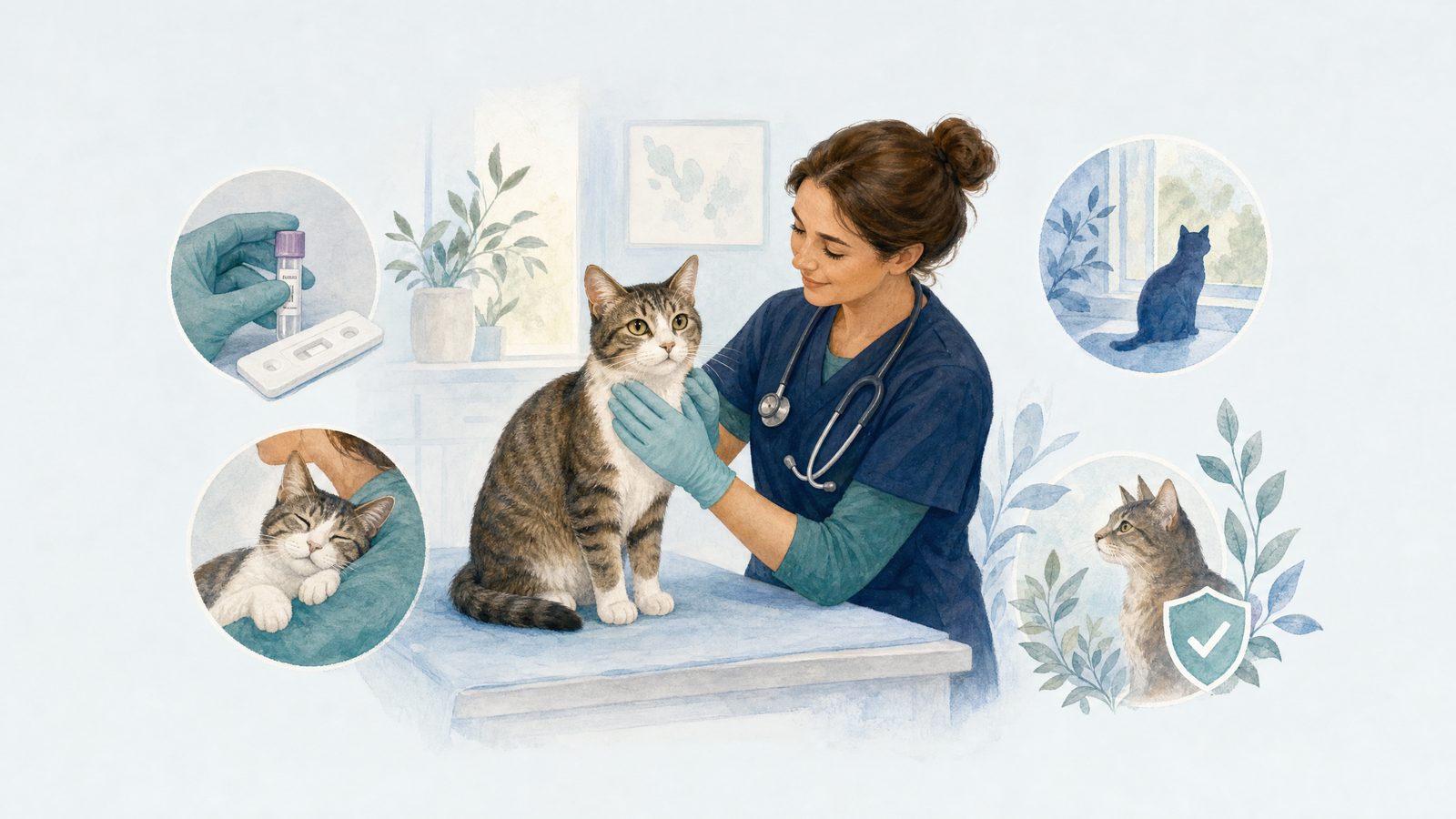
Feline leukemia virus, or FeLV, is an infectious disease of cats. It can affect the immune system and contribute to other serious illness. Testing and an individual prevention plan are more useful than assumptions based on whether a cat looks healthy.
How exposure happens
FeLV can spread between cats through close contact, including exposure to saliva and other infected secretions. Kittens may also acquire infection from their mother. It is not a disease that passes from cats to people or dogs.
Discuss the household with your veterinarian, including outdoor access, new arrivals and the status of other cats. An apparently healthy cat may still need testing.
Signs are not specific
Some infected cats remain outwardly well for a time. Poor appetite, weight loss, low energy and recurring infections are among the changes that warrant an examination, but those signs have many possible causes.
Do not diagnose FeLV from symptoms or assume a positive test explains every new problem. Your veterinarian needs to assess the cat's current health as well as infection status.
Understanding test results
Blood testing is commonly used in the investigation. A result may need confirmation or follow-up, depending on the test, recent exposure and the cat's history. Ask the clinic what the result means, whether another sample is needed and how to manage contact with other cats meanwhile.
Keep a copy of the test record and any follow-up dates. Avoid irreversible decisions based only on an unexplained screening result. The veterinarian can help interpret the evidence and discuss the individual cat's outlook.
Prevention and vaccination
Ask about testing before introducing a new cat and about a vaccination plan appropriate to age and exposure. Vaccination is an important preventive tool for appropriate cats, but it is not a treatment for an established infection or a substitute for managing exposure.
Housing and contact arrangements may need to change when cats have different infection statuses. Your clinic can help you plan those changes while maintaining each cat's welfare and access to resources.
Living with a positive diagnosis
A positive result is a reason for an informed care plan, not a universal prediction of immediate illness. Regular veterinary follow-up and prompt attention to new symptoms matter. Treatment addresses the cat's particular problems and secondary illnesses.
Monitor appetite, weight, energy and behavior. Ask what changes require a same-day call and how often your cat should be examined. The aim is to make decisions from the individual cat's health and comfort rather than an old, fixed survival estimate.