
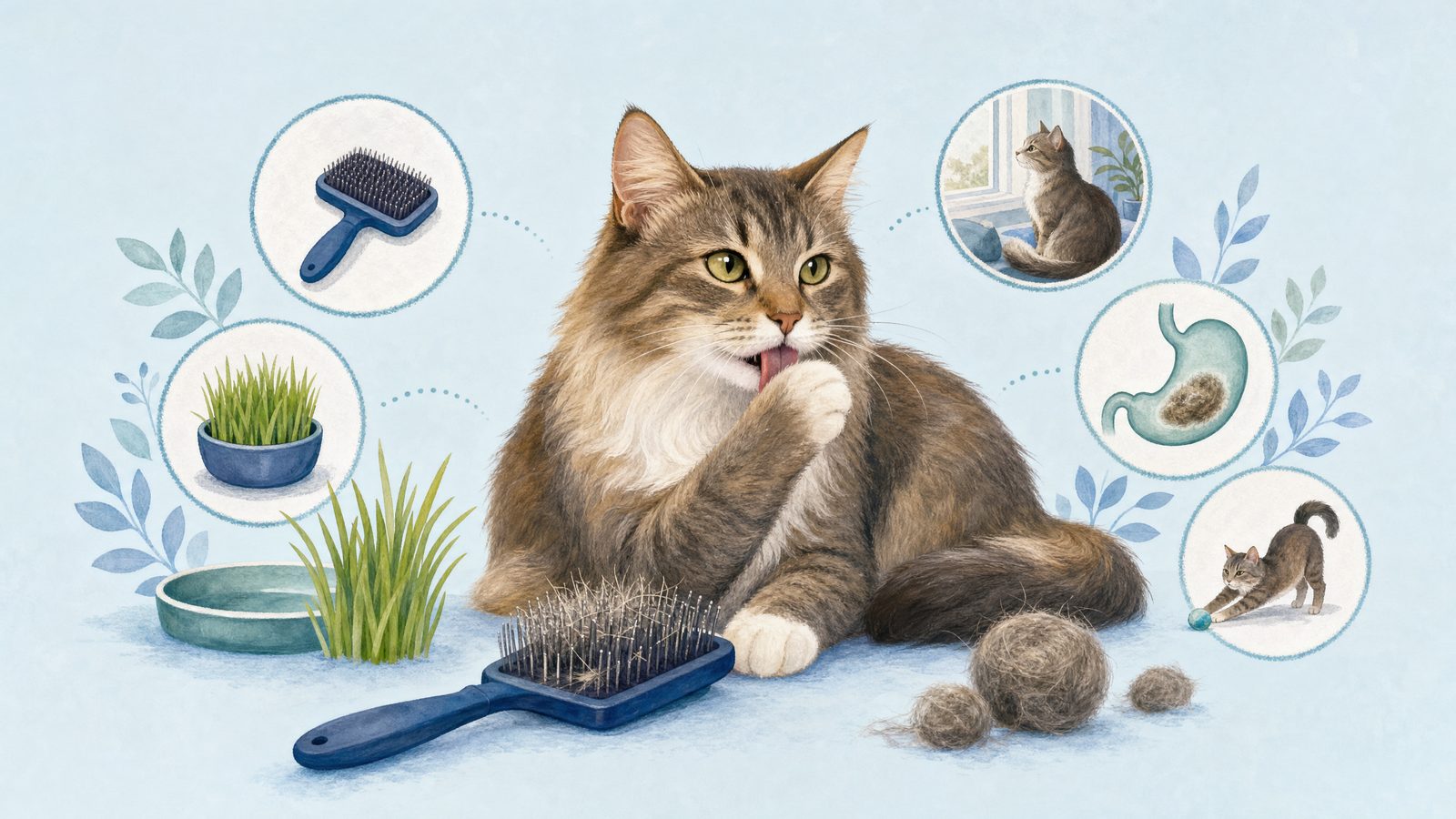
Cats swallow loose hair while grooming. Much of it passes through the digestive tract, but some may be brought up as a hairball. Repeated retching or vomiting should not automatically be treated as an ordinary grooming issue.
Understand what you are seeing
A hairball is material your cat brings up, often shaped by its passage through the esophagus. Coughing, gagging and vomiting can look similar to an observer. A cat that seems to be trying to produce a hairball may have another problem.
Take a short video if it is safe to do so. Note whether material appears, how often episodes occur and whether appetite, energy or litter-box habits have changed. Those details help your veterinarian decide what to investigate.
When to contact the clinic
Seek advice for repeated episodes, reduced appetite, weight loss, constipation or a cat that seems uncomfortable or unwell. Breathing difficulty is urgent and should never be assumed to be a hairball. Repeated unsuccessful retching also warrants prompt veterinary advice.
The pattern and the individual cat's condition matter. A history of hairballs does not rule out a new illness or obstruction.
Grooming can help reduce swallowed hair
Regular brushing removes loose hair before your cat swallows it. Choose a tool that suits the coat and keep sessions gentle and brief. Long-haired cats may need more frequent attention, but short-haired cats also benefit from an appropriate grooming routine.
Do not pull at painful mats or cut close to the skin with scissors. Ask your clinic or an experienced groomer for help when tangles are severe. If your cat suddenly grooms much more, or stops grooming normally, mention that change to the veterinarian.
Choose diet changes with advice
Some diets or products are marketed for hairball control. Ask whether one is suitable for your cat's nutritional needs and medical history. A hairball label is not a substitute for investigating recurring vomiting.
Do not give cooking oil, human laxatives or improvised remedies. Use a veterinary-recommended product only as directed. Keep strings, ribbons and swallowable toy parts out of reach; these can cause problems unrelated to grooming.
Track the pattern
Keep a simple log of grooming, food changes and episodes. If a management plan helps, continue monitoring rather than assuming the issue is permanently solved. Report recurrence or new signs so your veterinarian can reassess the cause and adjust the plan.