
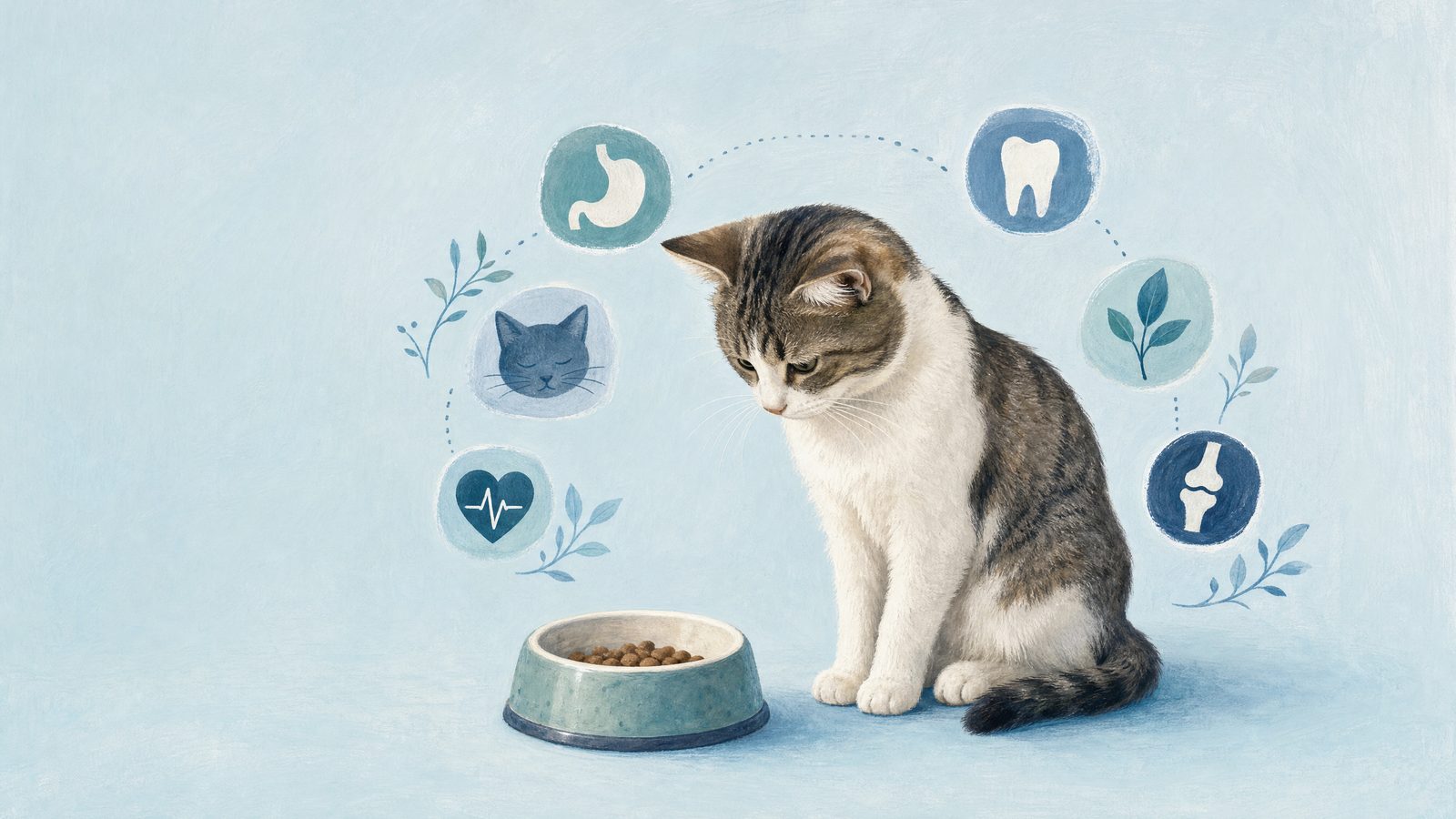
A cat that stops eating needs prompt attention. Appetite loss can accompany pain, nausea, disease or stress. Do not assume that a cat is being stubborn, and do not wait several days before contacting your veterinarian.
Work out how much is actually being eaten
In a multi-cat home, an empty bowl does not tell you which cat ate. Observe meals separately if you can do so calmly. Record when you last saw your cat eat a normal amount and whether they approach food but turn away.
Tell the clinic whether water intake, urination, stool or energy has changed. Also mention vomiting, drooling, weight loss or a change in how your cat chews. These details are more useful than simply describing the cat as a picky eater.
Pain and physical illness
Dental or mouth problems can make eating uncomfortable. Nausea and gastrointestinal disease can reduce interest in food. Kidney disease and other conditions may also affect appetite. A cat may seem hungry yet be unable to eat comfortably.
None of these causes can be confirmed from behavior at the bowl alone. A veterinary examination helps distinguish mouth pain, systemic disease and other explanations. Testing depends on the findings.
Stress can contribute
A move, a new animal, a change in routine or an uncomfortable feeding location may affect eating. Provide a quiet place where your cat does not have to compete for the bowl. Keep food and water resources easy to reach.
Even when a stressful event seems obvious, it does not exclude illness. Report the change to your clinic rather than relying only on environmental adjustments. Sudden appetite loss in a previously reliable eater deserves particular attention.
Get advice promptly
Call your veterinarian when your cat stops eating or is eating substantially less. If there is marked weakness, repeated vomiting, pain, breathing difficulty or suspected poisoning, seek urgent care. Kittens and cats with ongoing medical conditions need especially prompt advice.
Cats can develop serious complications from sustained inadequate intake. Do not assume that waiting for hunger will resolve the problem.
Avoid a cycle of improvised fixes
Do not force-feed, syringe food or give appetite medicines without veterinary instructions. Ask what food to offer while waiting and whether an examination is needed immediately. Bring the usual food label and a medication list to the appointment.
Once a plan is in place, measure intake and report whether your cat is meeting the veterinarian's target. Treating the cause and restoring adequate nutrition are both important; seeing a few bites disappear is not always evidence that the problem has resolved.