
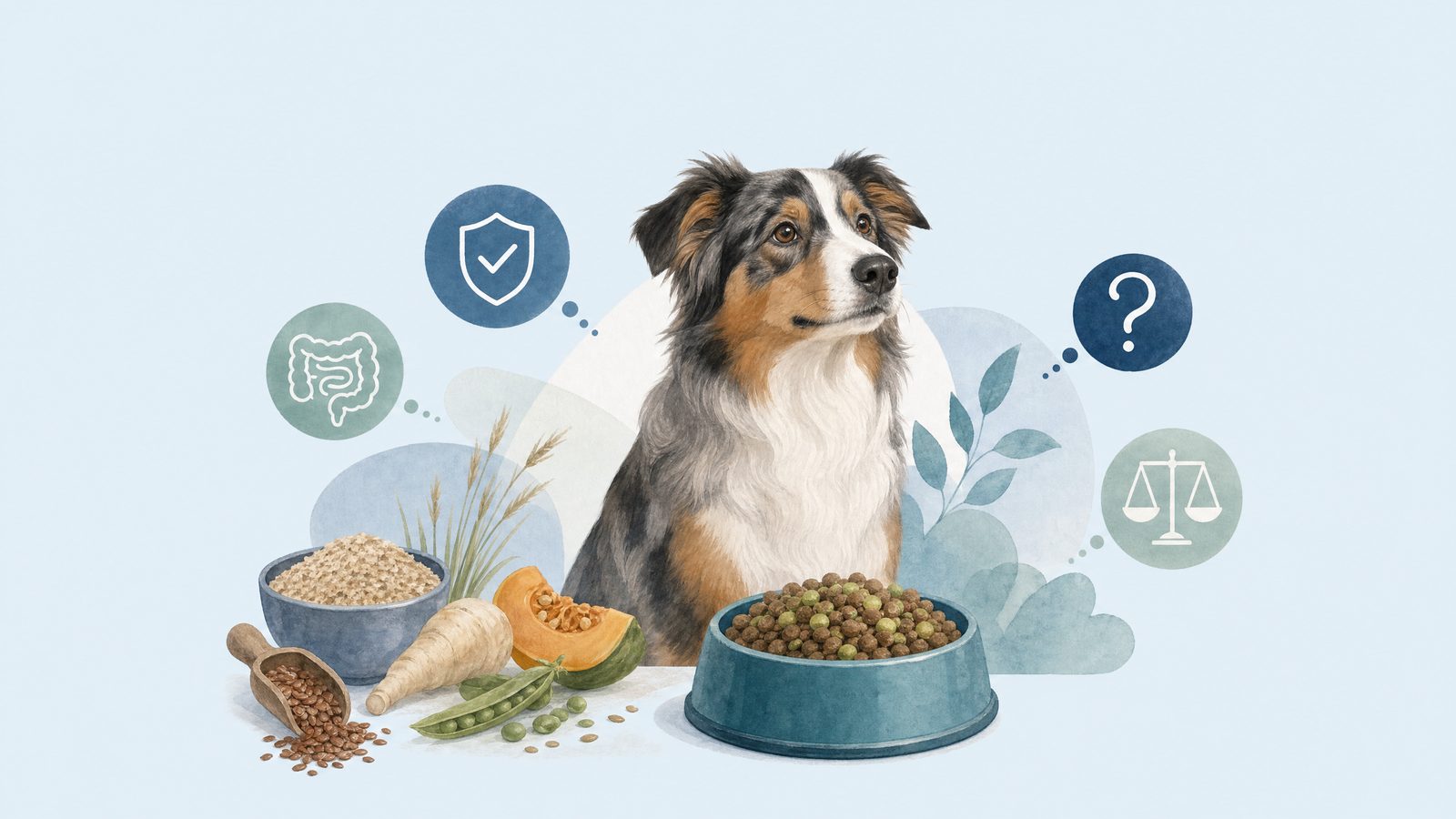
Fiber is part of many dog foods, but more is not automatically better. The type and amount that suits a dog depends on the complete diet and the reason for considering a change. Persistent digestive problems deserve an investigation rather than an improvised supplement routine.
What dietary fiber means
Fiber includes components of plant foods that are not digested in the same way as readily available starch. Different fibers behave differently in the digestive tract. Food labels may list ingredients such as beet pulp or bran, but an ingredient name alone does not tell you how the entire diet will perform.
A comparison based only on the crude-fiber percentage can also miss important differences between products. Ask your veterinarian what feature matters for your dog's situation rather than simply choosing the food with the highest number.
Why a veterinarian might discuss it
Stool quality, weight management and anal-sac problems can be topics for a nutrition conversation, but fiber is not a universal treatment for diarrhea, constipation or scooting. Different causes require different responses.
Tell the veterinarian what you hope to improve and how long the problem has been present. Describe stool frequency and consistency, appetite and any straining or discomfort. A change that seems dietary may need examination or testing first.
Keep the whole diet in view
Choose a complete and balanced food suited to your dog's life stage and any diagnosed condition. Adding large amounts of vegetables, bran or a supplement can alter the balance of the diet and the amount your dog actually eats.
Do not substitute a homemade recipe for a therapeutic diet without qualified advice. Dogs with conditions such as kidney disease or diabetes may need a specific nutritional plan, not a generic high-fiber recommendation.
Make changes deliberately
If your veterinarian recommends a change, ask how to introduce it and what improvement to expect. Keep other foods and treats consistent so the response is easier to interpret. Provide access to fresh water unless the clinic gives an individual instruction.
Report new discomfort, vomiting, diarrhea or difficulty passing stool. Avoid escalating supplement amounts because an initial change did not work quickly. The next step may be a reassessment rather than more of the same ingredient.
Questions for the appointment
Ask whether the goal is stool quality, body-weight management or another problem; whether a complete food change or a measured supplement is appropriate; and when the plan should be reviewed. Bring the current food label and a list of treats so the recommendation reflects the diet your dog actually receives.