
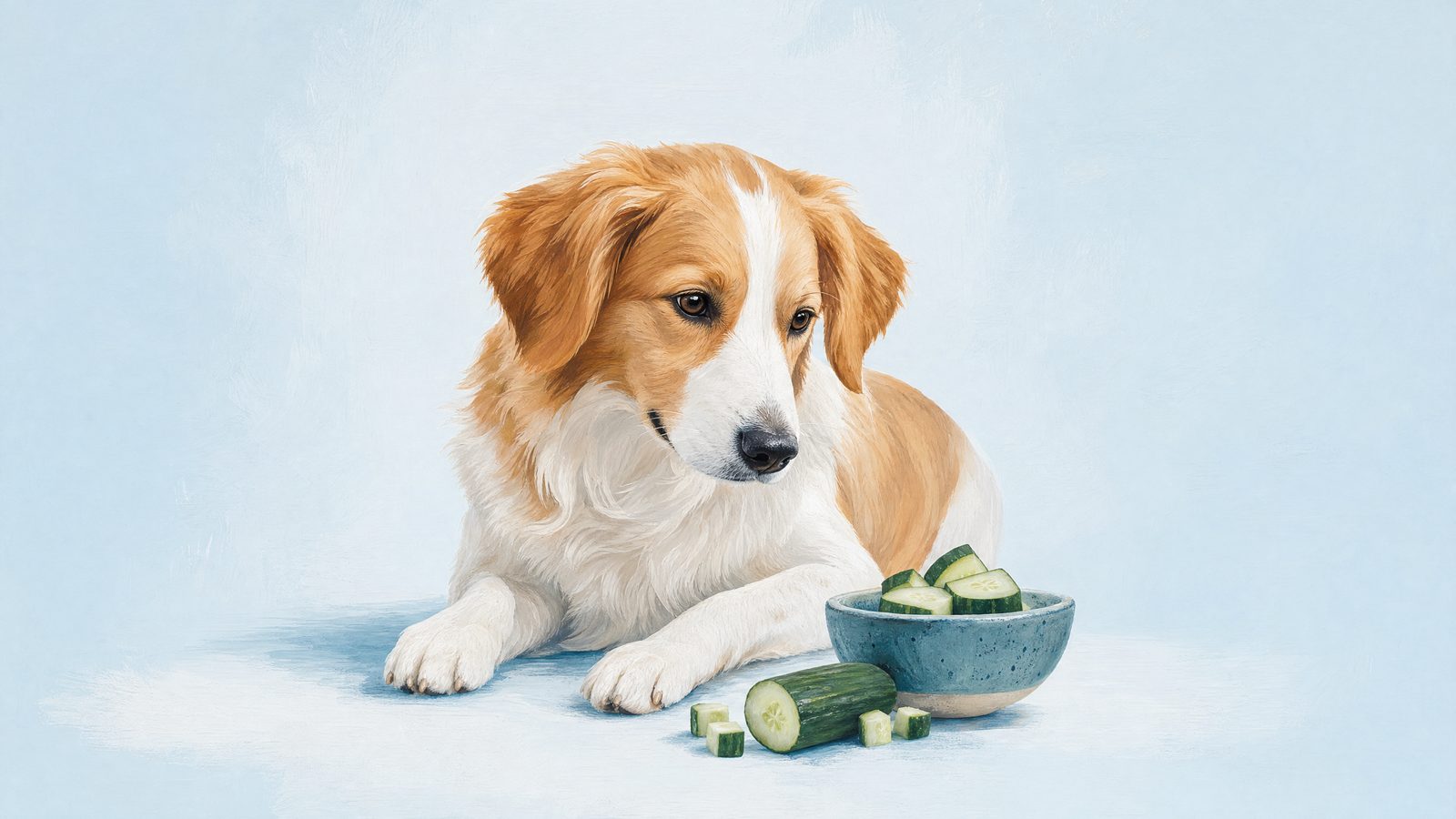
Plain cucumber can be an occasional treat for many dogs. It should be offered in a small amount and prepared to suit the dog's size and chewing ability. It is not a replacement for a complete diet or a treatment for dehydration or illness.
Keep the preparation simple
Wash the cucumber and cut it into small, manageable pieces. A whole cucumber or a large chunk can be difficult to chew and may present a choking risk. Supervise your dog while eating and avoid tossing food for a dog that tends to gulp.
Offer it plain. Pickles, seasoned cucumber dishes, dressings and sauces may contain excess salt or ingredients such as onion or garlic that are unsuitable for dogs. A food that is safe on its own is not necessarily safe in every recipe.
Start with a little
A dog trying an unfamiliar treat does not need a bowlful. Begin with a small amount and watch for digestive upset. Stop if it does not agree with your dog. There is no need to persuade a dog to like cucumber when they prefer their usual suitable treats.
Treats should remain a small part of the overall diet. Ask your veterinarian how to account for them if your dog is following a weight-management plan or receiving a therapeutic food. The right choice depends on the rest of the day's intake, not simply whether a snack is described as healthy.
Special diets need extra care
Check before offering new foods to a dog on an elimination diet or with a condition requiring controlled nutrition. Even a simple snack can interfere with a diet trial or a carefully designed plan.
Do not use cucumber or another vegetable to replace meals for a dog that is not eating normally. A change in appetite deserves attention, especially when accompanied by vomiting, diarrhea, tiredness or pain.
Avoid making the treat complicated
There is no nutritional requirement to turn cucumber into a frozen block, add sweeteners or combine it with supplements. Plain, appropriately cut pieces are easier to assess and supervise. Continue providing fresh drinking water independently of snacks.
If your dog develops choking signs, difficulty breathing or marked illness after eating, seek urgent veterinary help. For mild digestive changes, stop the new treat and ask the clinic for advice if signs persist or your dog seems unwell.
Fit treats into the routine
Use a suitable small treat to reward a familiar behavior, and include it in the daily food allowance. Keep a list of extras when discussing diet with your veterinarian. A balanced routine matters more than adding any one vegetable to the menu.