
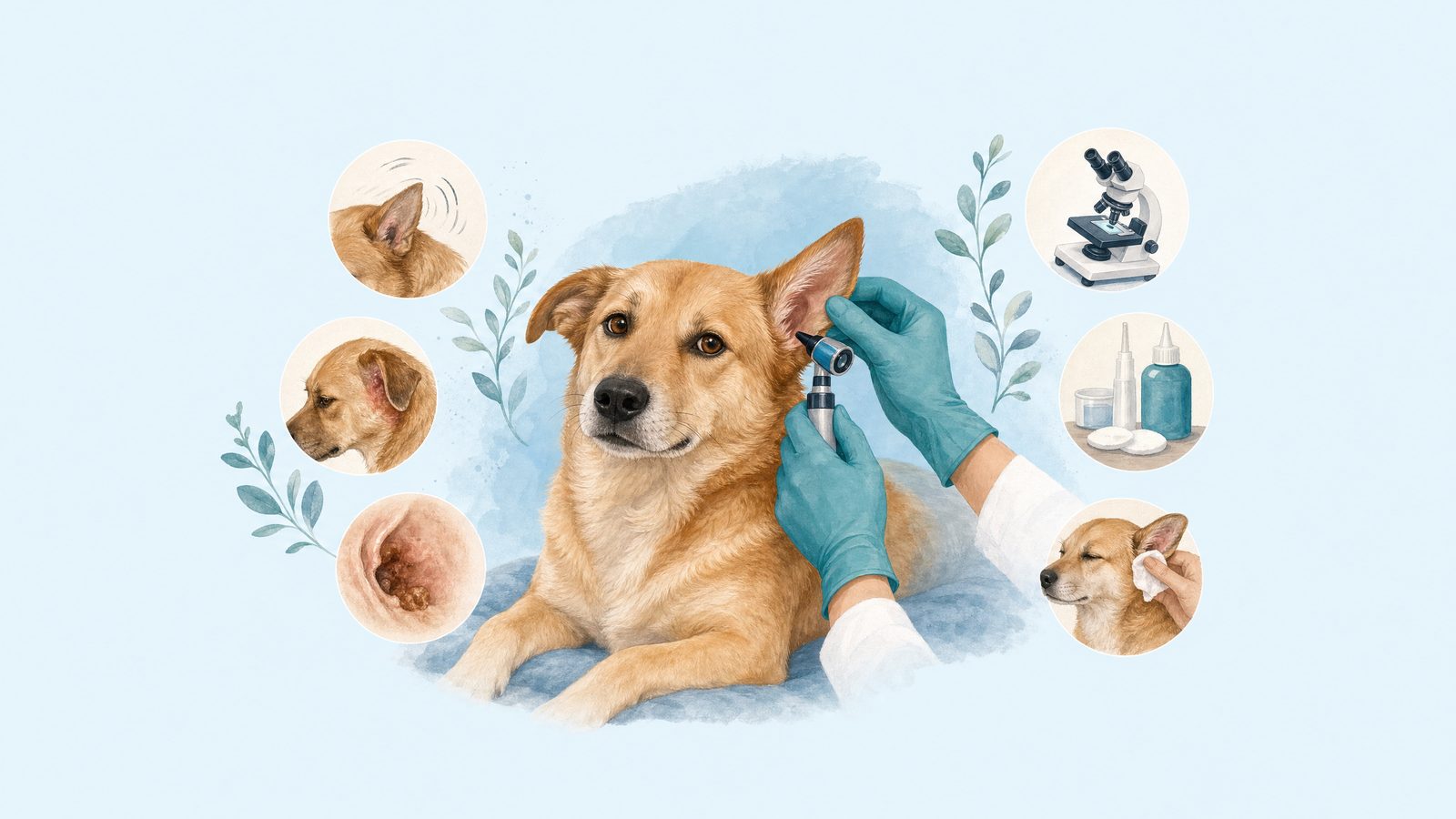
Head shaking, an unusual ear odor or repeated scratching can be signs of an ear problem. A painful ear needs an examination rather than a trial of household remedies. Finding the underlying cause helps reduce the chance that the problem will return.
Why ear problems develop
A dog's ear canal has a bend that can retain moisture and debris. Ear shape, swimming, underlying allergies and other factors can make inflammation more likely. Bacteria or yeast may multiply in an inflamed canal, but they are not the only possible explanation. Parasites, a foreign object or a growth can also be involved.
Recurring infections are a reason to investigate the pattern, rather than repeatedly using the same leftover drops. Tell your veterinarian whether one ear or both are affected, whether episodes follow swimming and whether your dog also has itchy paws or skin.
Signs to watch for
Look for redness, discharge, swelling, odor, rubbing against furniture or discomfort when the ear is touched. Some dogs resist having a collar put on or move away from a hand near their head. Do not force an inspection if your dog is in pain.
Head tilt, loss of balance, unusual eye movements or facial changes need prompt veterinary attention. These signs can have causes beyond the outer ear and should not be managed as a routine cleaning problem.
What happens at the clinic
The veterinarian examines the ear canal and checks the eardrum when possible. A sample of material from the ear can help identify yeast, bacteria or other problems. Treatment depends on those findings and may involve cleaning, prescription medicine and treatment of an underlying allergy or other condition.
Follow the prescribed schedule and return for any recommended recheck. Improvement in odor or scratching does not necessarily mean the problem has completely resolved. Contact the clinic if applying a prescribed product seems painful or signs worsen.
Cleaning safely
Ask the veterinarian to demonstrate the technique and recommend a product for your dog's ears. A painful ear, an obstructed canal or a damaged eardrum changes what is safe to use. Do not put vinegar, peroxide, essential oils or improvised mixtures into the canal. Avoid pushing cotton swabs down inside it.
Between episodes, record flare-ups and follow the recommended cleaning frequency. More frequent cleaning is not automatically better. A practical plan should account for your dog's ear health, tolerance of handling and activities such as swimming.