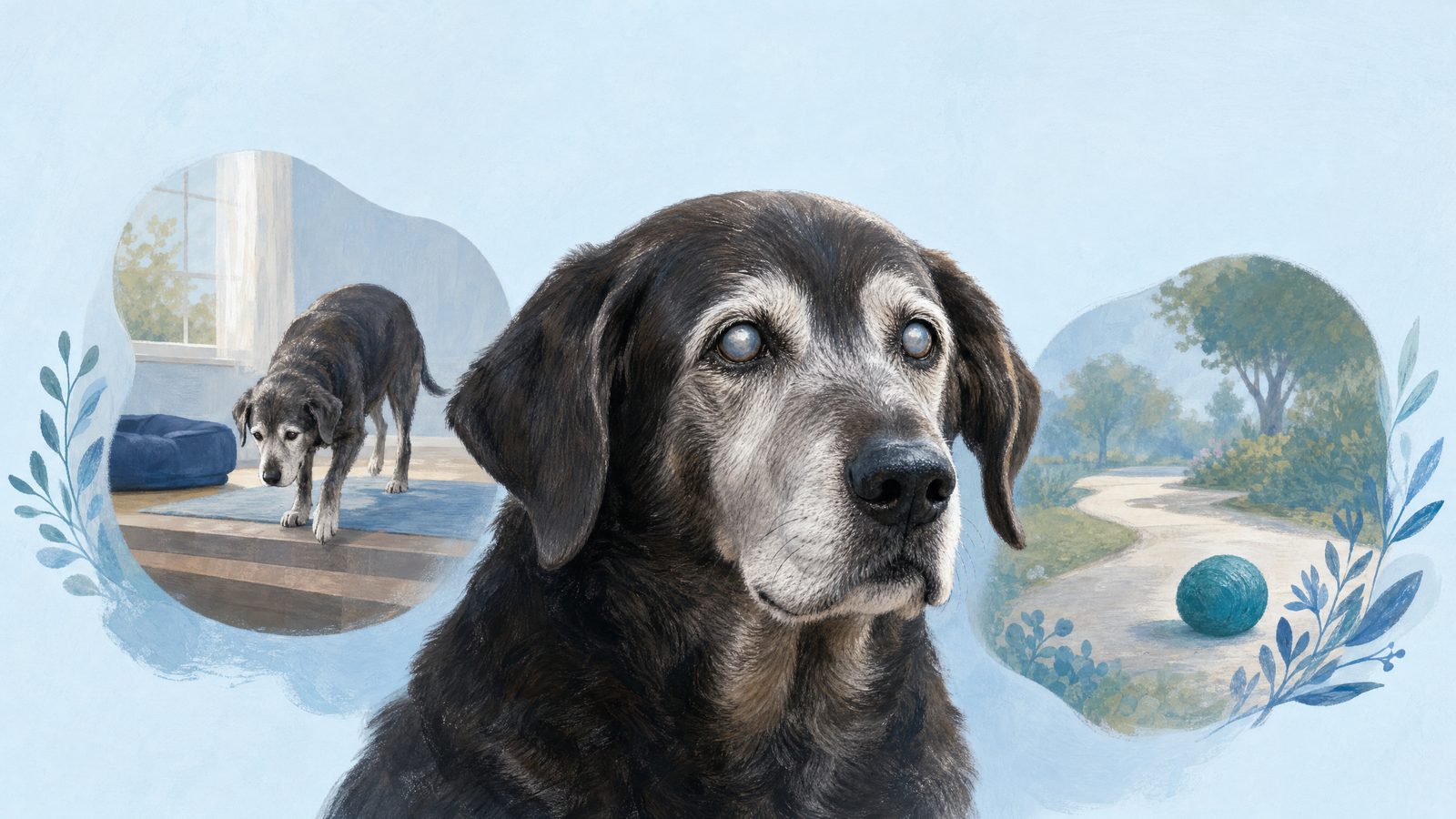
Cloudiness in a dog's eye deserves a veterinary examination. It may be a cataract, an age-related lens change or another eye problem. Looking at a photograph is not enough to distinguish those possibilities or determine whether the eye is painful.
What is a cataract?
A cataract is an opacity in the lens, the structure that helps focus light inside the eye. Its effect on vision depends on its size and extent. Some cataracts interfere with sight more than others, and progression varies between dogs.
Inherited factors, diabetes, injury and other eye disease can be involved. A cataract is not simply a normal feature of getting older. Tell your veterinarian about changes in drinking, appetite or weight as well as anything you have noticed about the eyes.
Cataracts and nuclear sclerosis
Nuclear sclerosis is a different age-related change that can give the lens a bluish or hazy appearance. Distinguishing it from a cataract requires an eye examination.
A veterinarian examines the structures of the eye rather than relying on color alone. An ophthalmology referral may be appropriate to assess the retina, pressure within the eye and suitability for treatment. Do not assume that a cloudy eye is harmless because your dog still navigates a familiar room.
Changes you may notice at home
Your dog may hesitate at steps, bump into unfamiliar objects or have difficulty finding a toy. Changes may be easier to notice in an unfamiliar setting than at home. Record when they happen and whether one side seems more affected.
A red eye, squinting, rubbing, obvious pain or a sudden loss of vision needs prompt veterinary attention. These are reasons to contact the clinic even if cataracts have already been diagnosed.
Discussing treatment
Treatment decisions depend on the eye examination and the dog's overall health. Surgery may be an option for some dogs, with specialist assessment and follow-up. Ask what outcome is realistic, what aftercare involves and which problems would require an urgent return visit.
Do not put human eye drops or a product advertised to dissolve cataracts into your dog's eyes without veterinary advice. Medication and monitoring may be needed for associated inflammation or other complications, whether or not surgery is chosen.
Supporting your dog at home
Keep furniture and important resources in predictable places. Block unsafe stairs and supervise in unfamiliar surroundings. Use a leash outdoors and give your dog time to investigate changes. Follow the clinic's recheck plan: comfort and eye health remain important even when lost vision cannot be restored.