
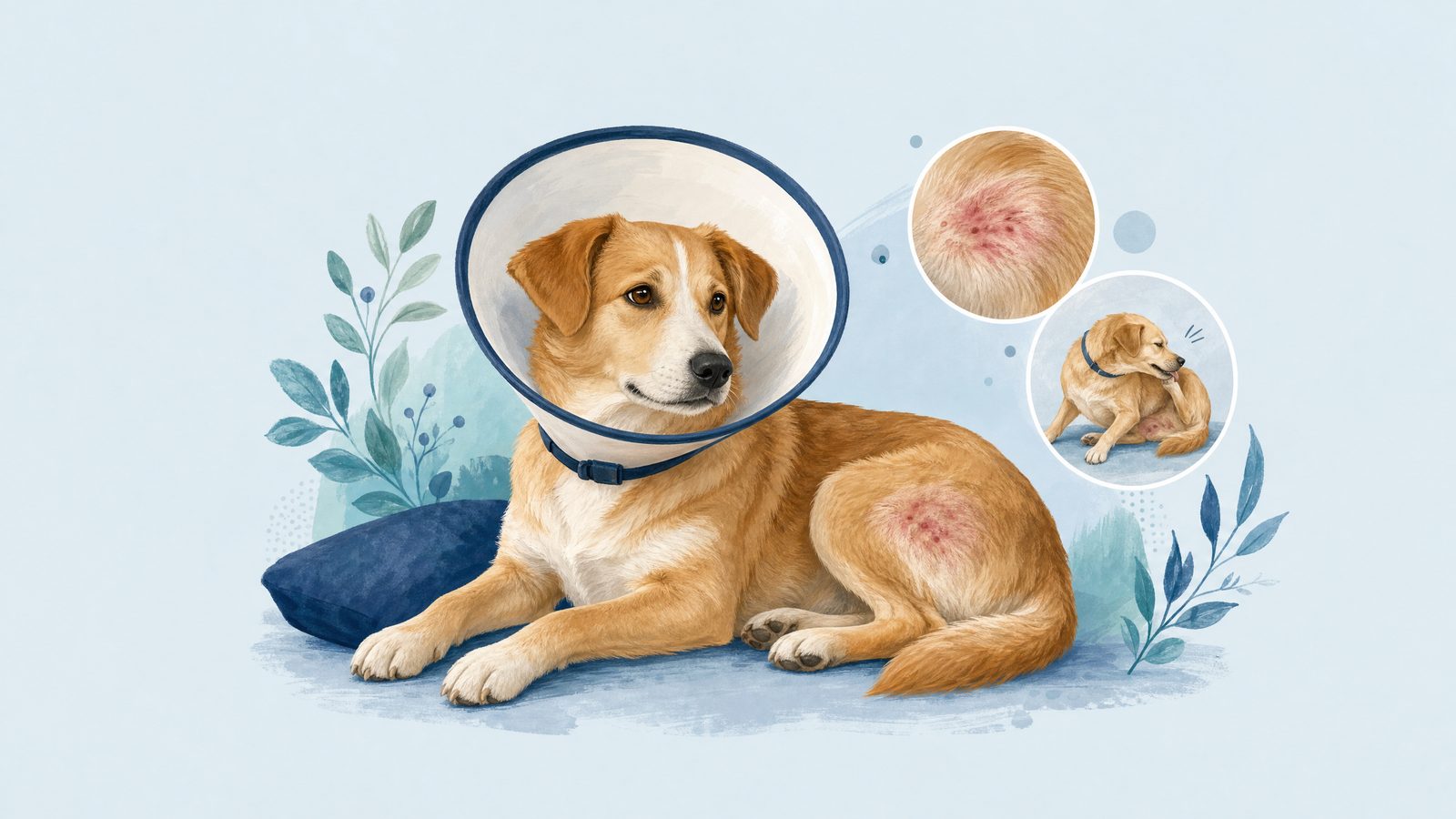
A hot spot is an inflamed, moist area of skin that a dog may lick, chew or scratch repeatedly. The surface can become raw and matted with fur. Because these areas can be painful and expand quickly, early veterinary advice is more useful than trying several products at home.
What a hot spot can look like
The original article describes red skin, moisture, crusting, hair loss and persistent attention to one area. You may notice an unpleasant smell or fur sticking together before you can see the skin underneath. A dog may flinch, move away or growl when the area is touched because it hurts.
Do not assume every bald or red patch is a hot spot. Parasites, wounds and other skin disorders can look similar. Photographs can document change, but an examination is needed to work out what is happening.
What starts the cycle?
An itch or irritation can lead to licking and chewing, which further damages the skin. Flea bites, allergies, moisture trapped in a coat and irritation associated with an ear or anal-sac problem are possible triggers. Repeated scratching can keep the cycle going even after the original irritation seems minor.
Matted or wet fur is not the same thing as mange, which is associated with mites and requires its own assessment. Your veterinarian may need to look beyond the visible patch to find the initial trigger.
What to do now
Contact the clinic and describe the size, location and how quickly the area is changing. Seek prompt care if your dog is very painful, seems unwell or the lesion is spreading. Prevent further licking if you can do so comfortably, and ask whether a properly fitted protective collar is appropriate.
Avoid cutting close to sore skin with scissors. Do not apply essential oils, human creams or harsh disinfectants. A product that is harmless on intact human skin may irritate damaged canine skin or be swallowed during grooming.
Treatment and prevention
The veterinarian can decide how to clean and expose the affected area, relieve discomfort and treat any infection. Prescription treatment depends on the examination; not every red patch needs the same medicine.
Longer-term prevention focuses on the trigger. Keep up with an appropriate flea-control plan, dry the coat after swimming or bathing and address matting gently. Report recurring ear problems or itch. If hot spots return, keep a record of their locations and timing so your veterinarian can look for a pattern instead of treating each episode in isolation.