
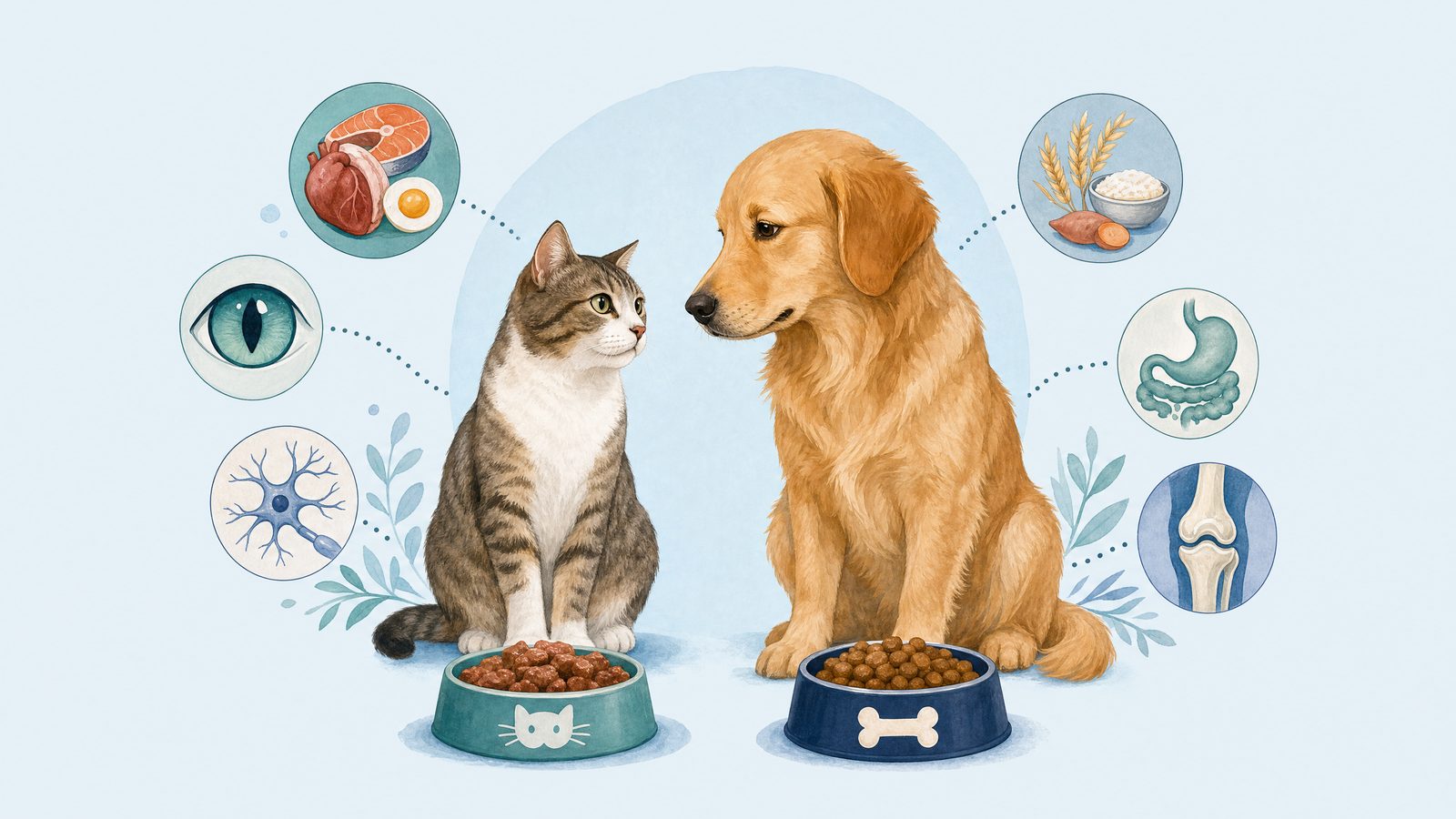
Dog food should not replace a cat's regular diet. Cats have nutritional requirements that differ from dogs, and a food formulated for one species is not automatically suitable for the other. A shared bowl may be convenient, but it makes it harder to know whether each pet is receiving the right food and amount.
Different species, different requirements
Cats are obligate carnivores with particular nutrient needs, including dietary taurine. That does not mean a bowl of plain meat is a complete cat diet. A suitable food must provide the full balance of nutrients for the cat's life stage.
Choose a nutritionally complete feline diet rather than trying to repair dog food with a single supplement. A label's list of ingredients cannot replace checking whether the food meets the cat's overall nutritional needs.
Read the nutritional statement
Look for a food intended to provide complete and balanced nutrition for cats at the appropriate life stage. A treat, topper or complementary product may not be suitable as the main diet. Your veterinarian can help interpret the label, particularly if your cat has a medical condition.
Wet and dry foods can both have a place in a feeding plan when they meet the cat's needs. The choice should consider the individual cat, calorie intake, preferences and any therapeutic requirements rather than a blanket claim that one format is always better.
What if your cat steals a mouthful?
A small accidental taste is different from regularly relying on dog food. Observe your cat and contact the veterinarian if there are symptoms, a large ingestion, a special medical diet or concern about an ingredient. Return to the appropriate cat food and address access to the dog's bowl.
If your cat persistently refuses cat food, do not use dog food as a long-term workaround. Appetite loss itself may need prompt assessment. Ask the clinic for a safe plan rather than waiting for hunger to solve the problem.
Feed pets separately
Separate rooms, supervised meals or a suitable access-controlled feeder can help. Remove uneaten food when appropriate for the feeding plan and measure what each pet receives. Keep fresh water available in comfortable locations.
Tell your veterinarian if one animal regularly steals the other's meals. The issue may affect both pets' intake and weight. A simple household feeding plan is often more useful than repeatedly buying new foods without knowing which animal is eating them.