
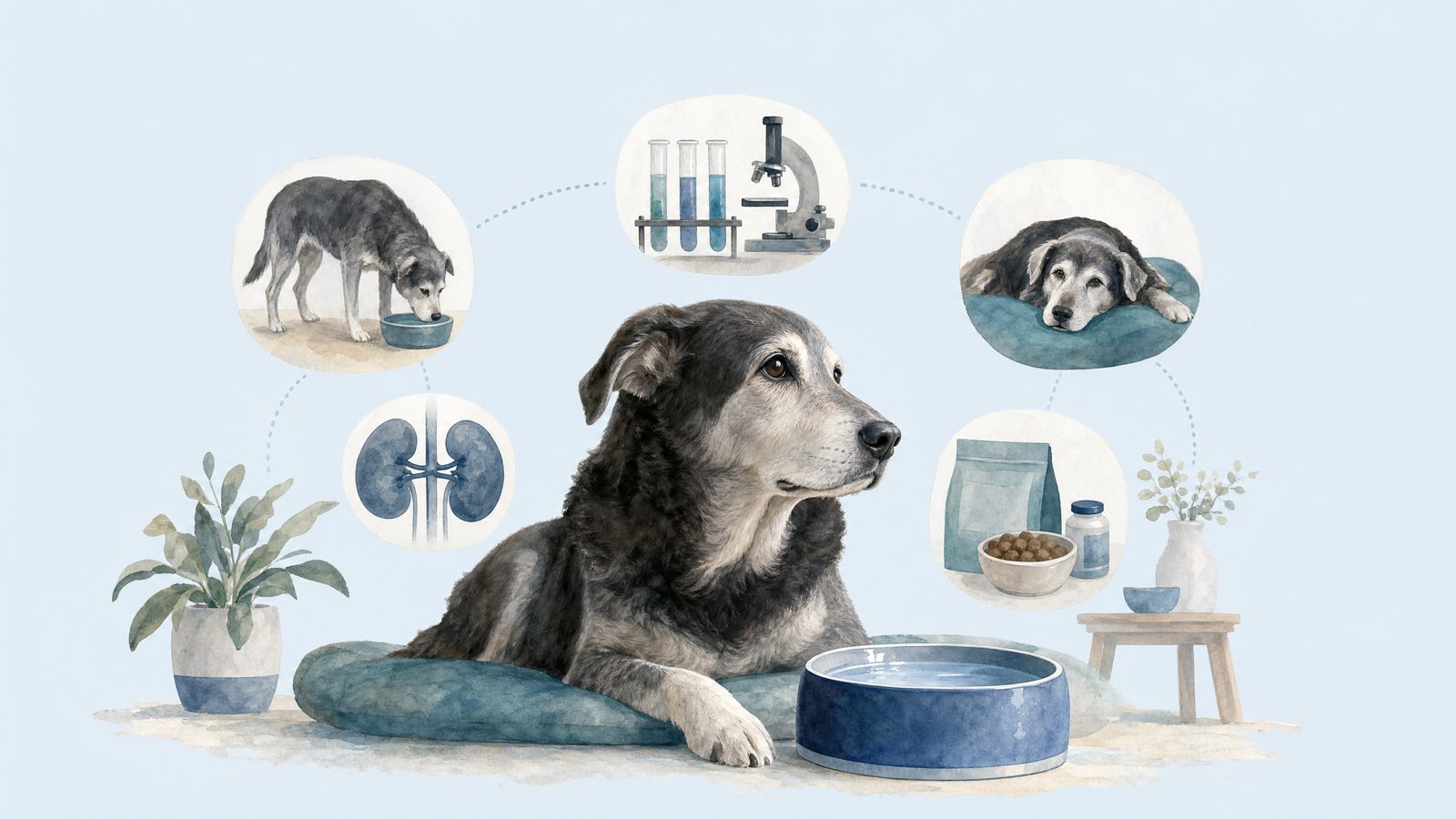
Changes in thirst, urination, appetite or energy can be reasons to check a dog's kidney health. These signs are not specific to kidney disease, and some dogs have few obvious changes early on. Veterinary testing is needed to understand the problem and choose care.
What the kidneys do
The kidneys help remove waste from the blood and regulate fluid and mineral balance. Kidney problems can develop suddenly or progress over time. Acute kidney injury and chronic kidney disease are different situations, although a dog may sometimes have elements of both.
Damage to the kidneys' filtering structures can affect several functions at once. Understanding the individual plan your veterinarian recommends is more useful than assuming every dog needs the same treatment.
Signs and exposures to report
Tell the clinic about increased drinking or urination, weight loss, poor appetite, vomiting or unusual tiredness. Changes in urine output, including very little urine, are particularly important to describe. Bring information about medicines, supplements and possible exposure to toxins.
Suspected ingestion of antifreeze, grapes, raisins or an inappropriate medicine requires urgent advice; do not wait for kidney symptoms to develop. Repeated vomiting, collapse or marked illness also needs prompt assessment.
How veterinarians investigate
The veterinarian may recommend blood and urine tests, blood-pressure measurement and imaging, depending on the situation. Results need interpretation together. A single symptom or an isolated laboratory value does not provide the whole picture.
Ask what the results suggest, whether additional testing is needed and when they should be repeated. If chronic disease is diagnosed, understanding the stage and complications helps explain why the treatment plan may change over time.
Treatment is individual
Care may include a therapeutic diet, management of nausea, treatment of blood-pressure problems and attention to hydration. Some dogs need fluid treatment; others do not. Fluid treatment must be tailored to the individual dog.
Give fluids or medicines only under the specific plan and training provided by your veterinary team. Do not create a homemade kidney diet from a generic recipe. Nutritional needs can be complex, and the clinic can help identify a suitable complete diet or qualified nutrition support.
Keep a useful home record
Track appetite, water intake, weight when practical, energy and medication use. Ask which changes warrant a same-day call and how to contact help after hours. Consistent follow-up can identify complications and make the care plan more responsive to your dog's comfort and daily life.