
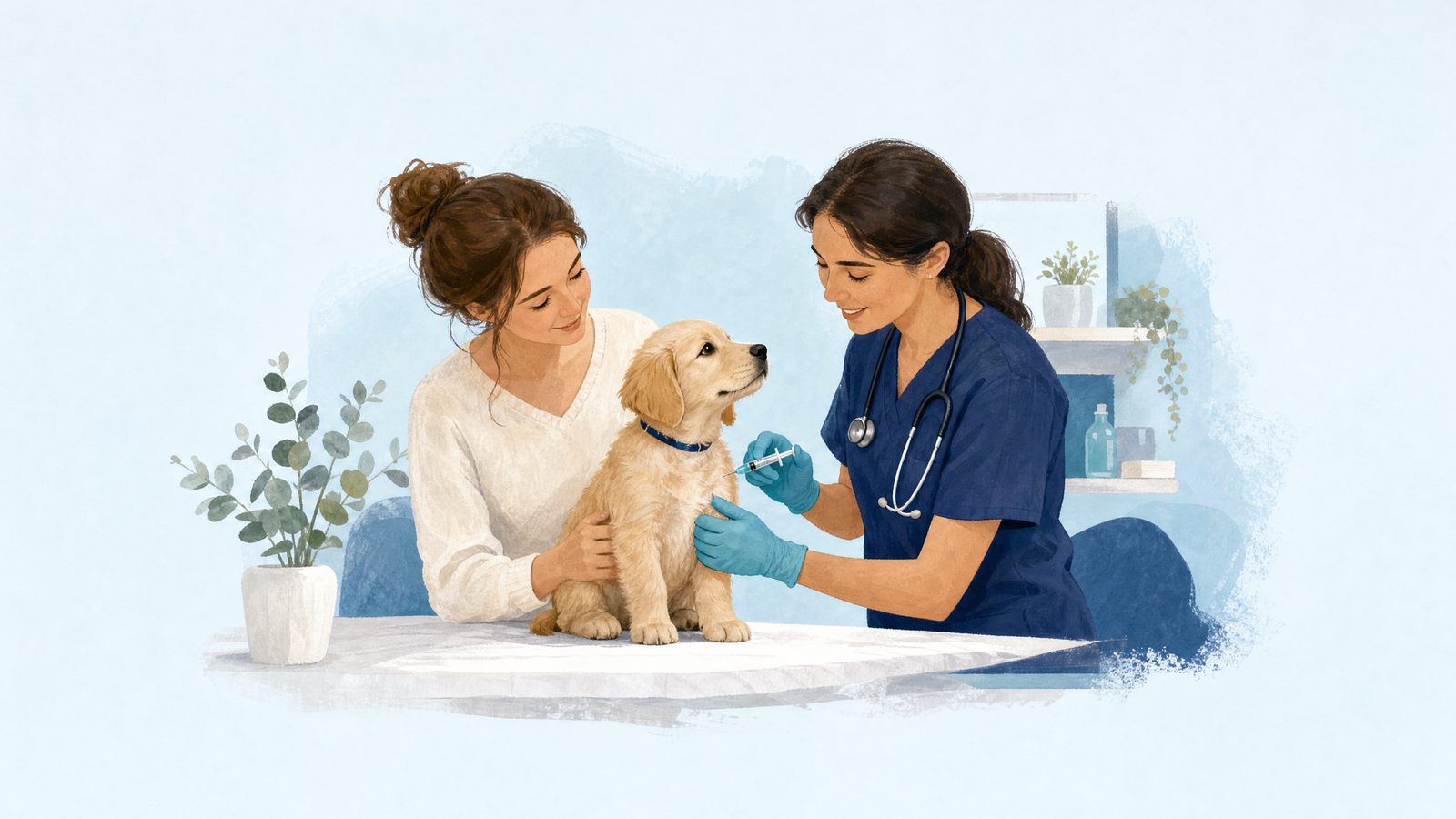
A puppy's vaccination plan is a series of appointments, not a single first shot. The timing depends on age, previous records, the vaccine and the veterinarian's assessment. Start by arranging a visit soon after your puppy comes home and bringing every available record.
Why several visits matter
Avoid missed appointments while your puppy is developing protection. Antibodies received from the mother can interfere with some early vaccine responses, which is one reason an initial puppy series involves repeat doses.
Ask your veterinarian to explain which doses are still needed and when the initial course is considered complete. Keep the plan somewhere everyone caring for the puppy can find it. A calendar reminder is more useful than trying to remember a list of vaccine names.
Core vaccines and individual risks
AAHA's current core list includes distemper, adenovirus, parvovirus, rabies and leptospirosis. Leptospirosis was added to the core recommendations in 2024. Other vaccines may be recommended according to location, travel, boarding, contact with other dogs and other exposures.
Rabies timing also depends on applicable local requirements and the product used. Your veterinary clinic can identify the schedule that applies to your puppy. Avoid copying an online timetable without checking it against the actual records.
Prepare for each appointment
Tell the clinic if your puppy has diarrhea, vomiting, coughing, poor appetite or unusual tiredness. Bring a list of medicines and parasite products. Ask what reactions to watch for, which number to call after hours and what activities are appropriate afterward.
Record the date of each visit and the next due date. If you miss an appointment, contact the clinic promptly about the revised schedule. Do not assume a missed visit means starting everything again, or that it can simply be skipped.
Socialization while protection develops
Your puppy also needs safe, positive experiences during early life. Ask your veterinarian how to balance socialization with local infectious-disease risks. The answer may include carefully chosen encounters and controlled environments rather than unrestricted access to busy dog areas.
Keep your puppy away from visibly sick dogs and places your clinic advises avoiding. Vaccination reduces important risks, but it does not protect against every cause of illness.
Questions to take with you
Ask which vaccines are being given, what they cover, when boosters are needed and how to store the record for boarding or travel. Discuss expected costs in advance so you can plan the full series. A clear written schedule makes it easier to complete preventive care without relying on outdated prices or generic internet advice.