
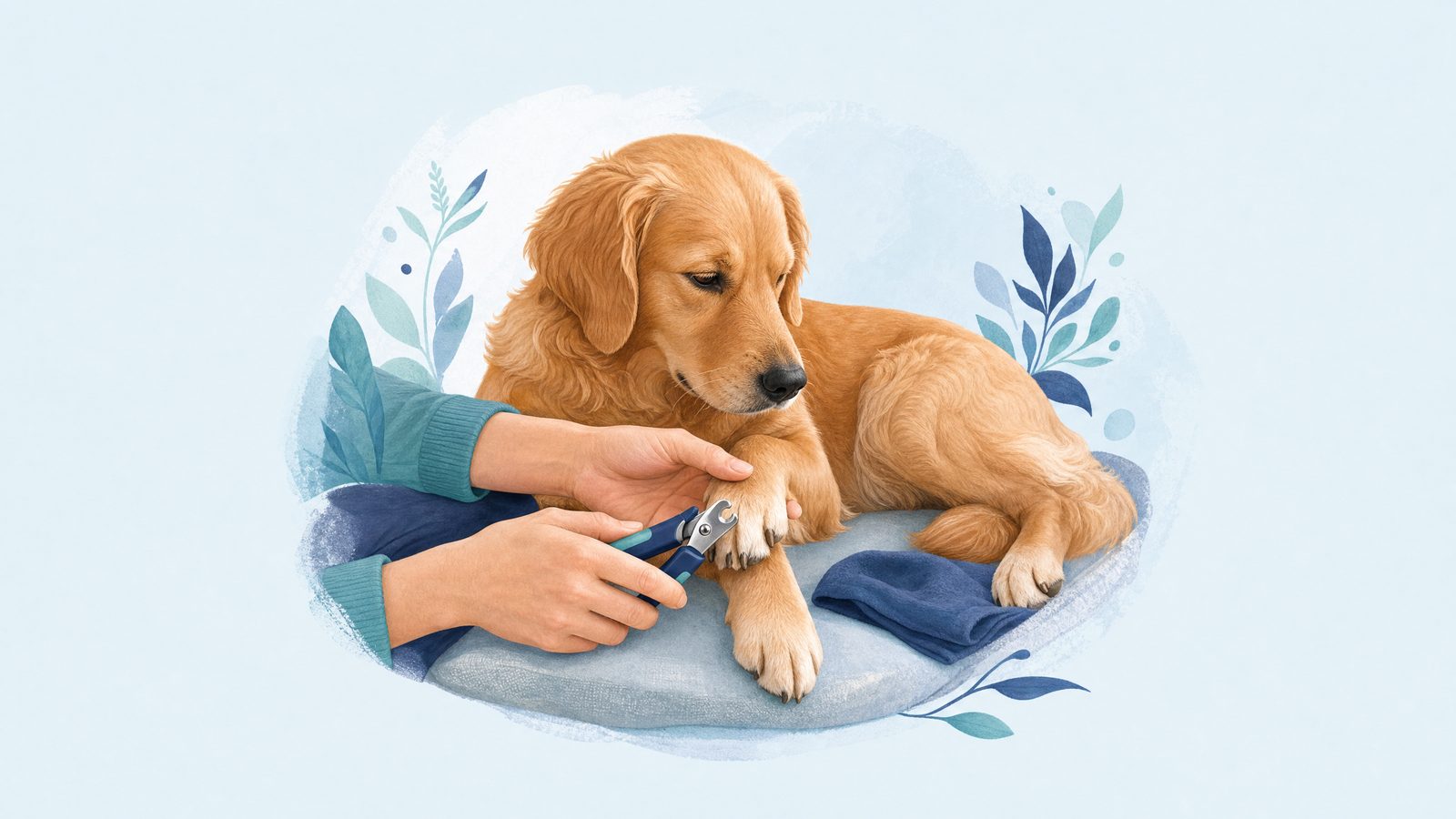
Nail care should be a comfortable routine, not a contest of strength. The right interval depends on your dog's nails, movement and the surfaces they walk on. A weekly check can help you notice overgrowth even when a trim is not yet needed.
Understand the nail before you trim
Inside the nail is the quick, which contains blood vessels and sensitive tissue. It may be visible in a pale nail and difficult to see in a dark one. Cutting into it causes pain and bleeding. Do not use a fixed nail length or a safety guard as a guarantee that a cut will be safe.
Check the dewclaws higher on the leg as well as the nails that meet the ground. Because dewclaws may not wear down naturally, they can become overgrown. Ask a veterinarian or experienced groomer to assess nails that curl toward the skin, split or look infected.
Make handling familiar
Begin with brief paw touches and rewards before introducing a clipper or grinder. Let your dog investigate the equipment at a comfortable distance. A grinder's sound may need a separate introduction, with no trimming at first.
Use a stable, nonslip surface and good lighting. Have your tools ready so the session stays short. You do not have to finish all the nails at once; one relaxed nail trim is a better starting point than a prolonged struggle. Stop when your dog pulls away repeatedly or becomes distressed.
Work conservatively
Have a professional demonstrate the technique on your own dog, particularly if the nails are dark or overgrown. Use a tool suited to the size of the nail, take only a small amount at a time and avoid guessing where the quick ends.
Keep fur clear of moving grinder parts and follow the tool's safety instructions. Do not restrain a frightened dog more forcefully just to finish. Your clinic can help develop a gradual handling plan and discuss additional support when grooming causes marked fear.
If a nail bleeds
Stop trimming. Apply gentle pressure with a clean cloth and contact your clinic for advice. A pet nail styptic product may be appropriate for a small trimming injury when used as directed. Get veterinary help for bleeding that does not settle, a torn nail, substantial pain or damage near the base.
Afterward, return to easier handling steps rather than rushing another full session. Keep notes about the tools, position and rewards your dog finds easiest so future nail care becomes more predictable.