
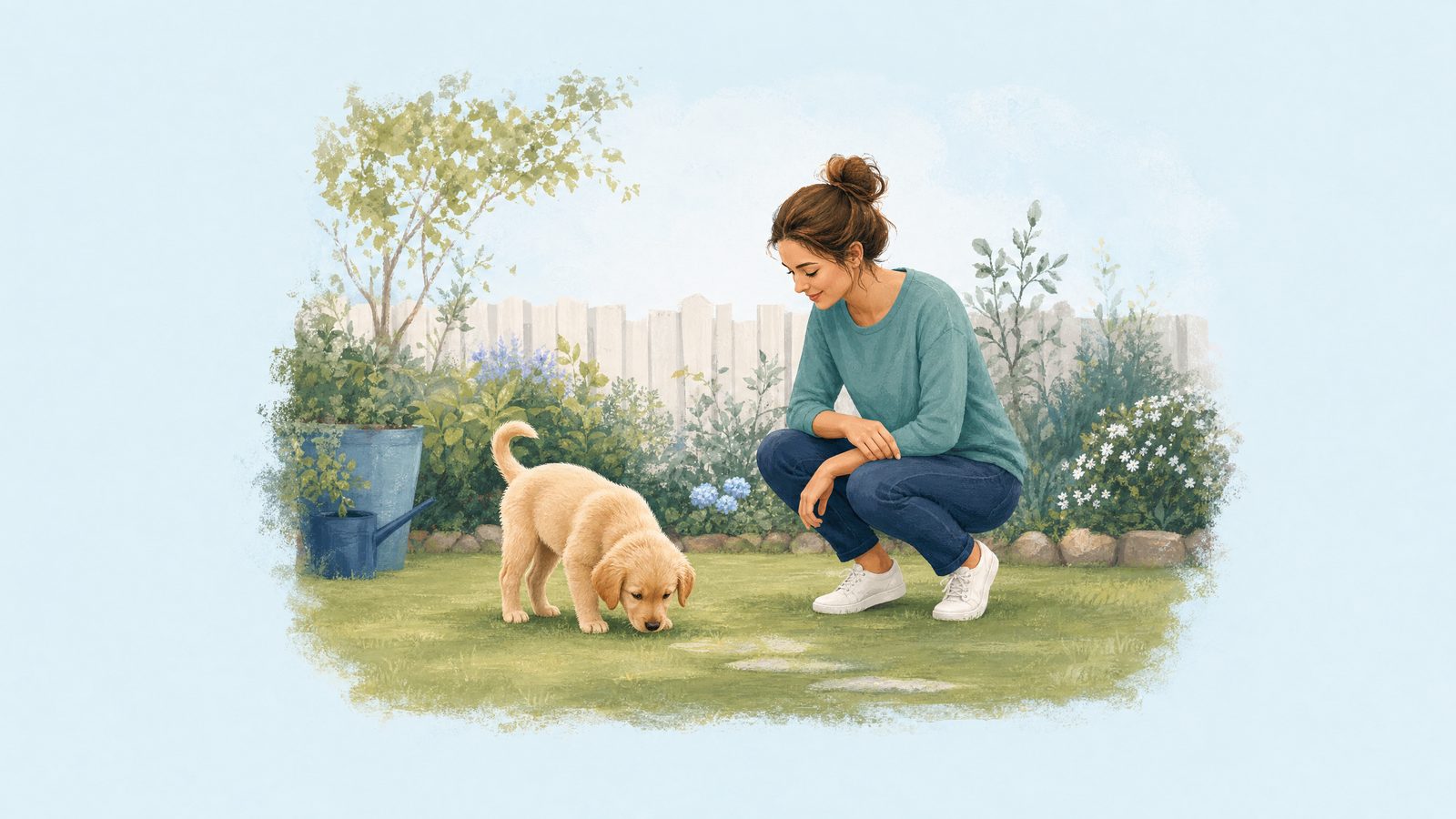
Potty training begins with opportunities to succeed. A puppy needs frequent toilet breaks, supervision and a clear reward when they use the chosen place. Accidents are information about the routine, not a reason to punish a young dog.
Start when your puppy comes home
Choose an accessible toilet area and introduce it early. Take your puppy there after waking, eating, drinking and playing, as well as before bedtime. Very young puppies may need additional breaks between those events.
Keep a short log of meals, naps and accidents. Patterns help you adjust the timing to this puppy rather than expecting a fixed schedule to fit every dog. Progress varies with age, previous experience and the home setup.
Reward the right moment
Stay nearby and reward your puppy promptly after they finish in the appropriate place. Use a calm, happy response and a small suitable treat if that works for your dog. Wait until they have finished rather than interrupting them with excitement.
Consistency helps: use a familiar route and toilet area, and agree on the routine with everyone in the household. A puppy may need reminders when visiting a different home even after doing well in familiar surroundings.
Respond to accidents without punishment
Do not shout, rub a puppy's nose in a mess or punish them after finding it. They may learn to hide from you rather than understand where to go. Clean the area with a pet-safe enzymatic cleaner according to its instructions.
If you notice the puppy beginning to squat indoors, calmly guide them to the toilet area if you can. Avoid grabbing or frightening them. If you discover an accident later, clean it up and consider whether the next break needs to happen sooner.
Make the environment manageable
Use supervision, a puppy-safe pen or gates to prevent unsupervised wandering. A comfortable rest space should never be used as punishment. Arrange help if your puppy cannot reasonably wait through your workday or overnight routine.
Apartment living may require an indoor toilet option while access to outdoors is being worked out. Keep it in a safe, consistent place and reward its use. Do not leave a puppy unattended on a balcony.
Know when to ask for help
Sudden regression, straining, blood, unusually frequent urination or diarrhea deserve veterinary advice. Not every accident is a training problem. If your puppy is healthy but progress has stalled, a reward-based trainer can help you adjust the setup and timing without making toileting frightening.