
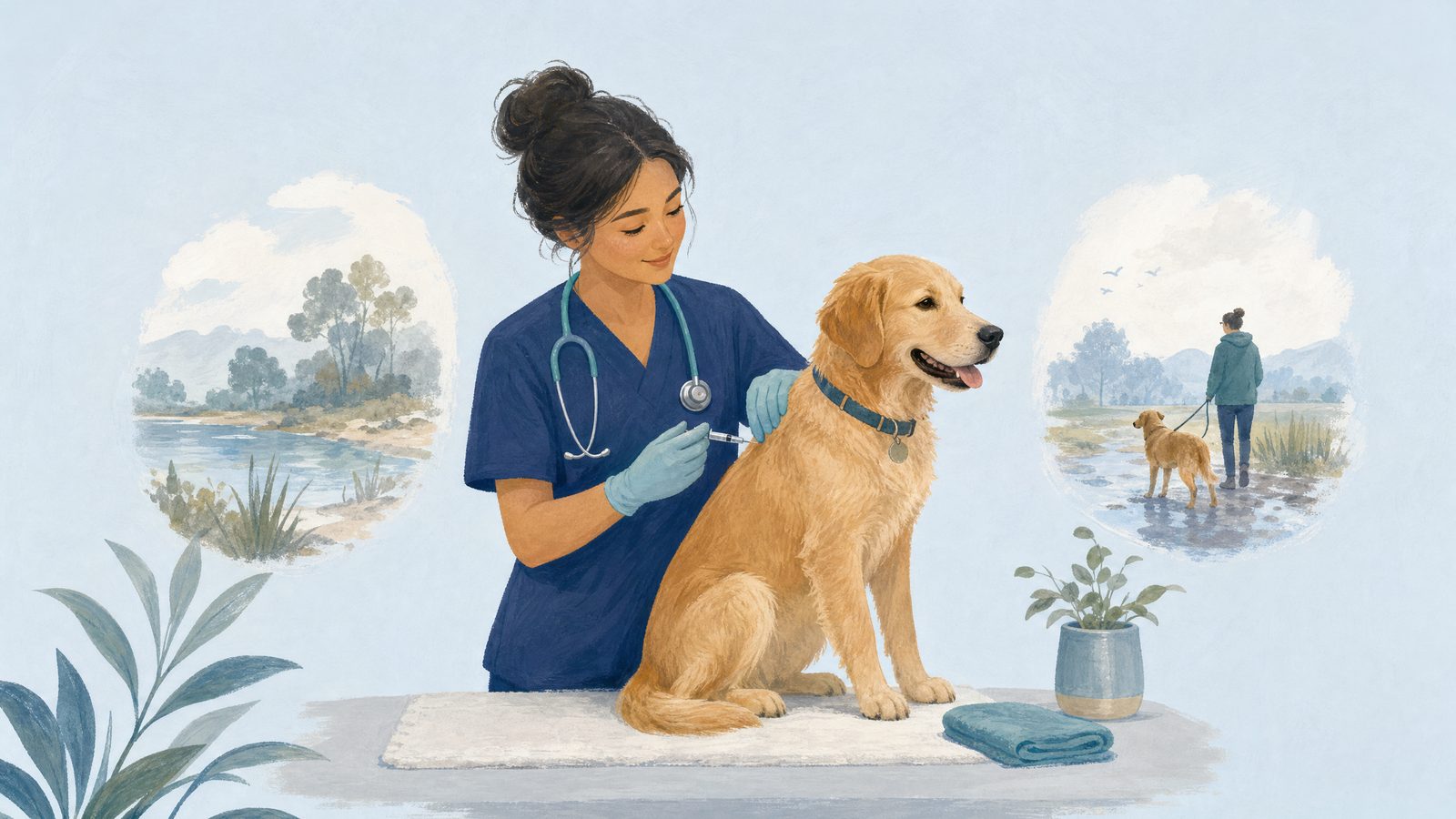
Leptospirosis is a bacterial disease that can affect dogs and people. Exposure can involve infected urine or contaminated water and soil. A prevention conversation belongs in routine veterinary care, even when your dog does not swim or live in the countryside.
How the guidance has changed
AAHA updated its canine vaccination guidance in 2024 to classify leptospirosis vaccination as core for all dogs.
Urban and suburban dogs can encounter rodents and contaminated environments too. Tell your veterinarian where your dog walks, whether they travel, and whether they attend boarding or daycare. Those details help the clinic plan care, but a small size or mostly indoor lifestyle is not a reason to assume there is no exposure.
Bring the complete vaccination record
Take records from the breeder, shelter or previous clinic rather than relying on memory. The veterinarian needs to know what was given, when and whether the initial course was completed. An appointment for one injection does not necessarily complete protection.
Ask which visits are needed next and have the clinic write the dates down. If a dose is missed, contact the clinic about how to continue; do not guess that the original schedule still applies. Follow the veterinarian's product-specific plan for the initial series and boosters.
Discuss previous reactions
Tell the clinic about previous swelling, vomiting, collapse or other reactions after vaccination, including how soon they happened. Bring a medication list and mention any current illness. Your veterinarian can weigh your dog's history and decide how to organize the visit.
Ask what mild effects might occur and which signs require a call. Facial swelling, difficulty breathing, collapse or severe illness after vaccination need urgent veterinary attention. Do not wait to see whether a serious reaction resolves on its own.
Prevention beyond the appointment
Reduce access to standing water and rodents where practical, and discuss safe cleanup if infection is suspected. Vaccination is one part of a prevention plan, not permission to ignore illness or known exposure.
If your dog develops vomiting, marked tiredness, poor appetite or other concerning signs, describe both the symptoms and possible exposures to the clinic. These signs have many causes, so a vaccination history alone cannot confirm or rule out leptospirosis. Keep the prevention record with the rest of your dog's medical information for future visits.