
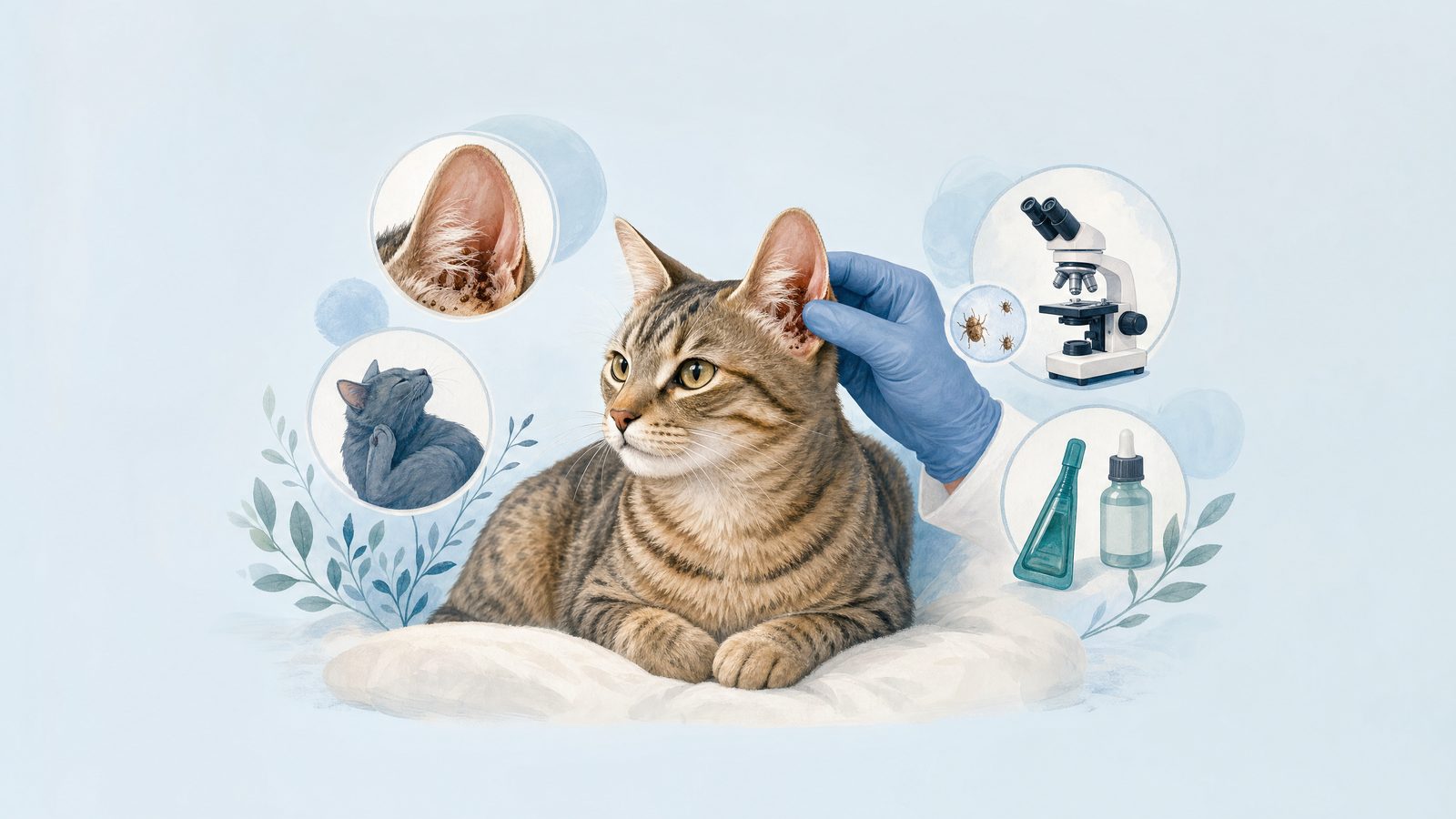
Ear mites can cause irritation and scratching, but they are not the only explanation for a cat's uncomfortable ears. Dark debris, head shaking or repeated rubbing is a reason to arrange an examination rather than choose a treatment from appearance alone.
What are ear mites?
The mite commonly associated with this problem is Otodectes cynotis. These tiny parasites live around the ear canal and can pass between animals, particularly through close contact. A veterinarian can check for them using an ear examination and a sample of debris.
You may notice dark material described as resembling coffee grounds. That appearance does not prove mites are present. Wax, infection and other ear conditions may look similar, and more than one problem can occur together.
Signs to record
Watch for head shaking, scratching, rubbing the ears against objects, redness or discomfort. Scratching may cause wounds around the ears. Tell the clinic whether another animal in the household has similar signs or whether your cat has recently joined the home.
Do not force a close inspection if your cat is painful. Head tilt, balance changes or marked illness need prompt veterinary advice. These signs should not be handled as a simple routine cleaning problem.
Why diagnosis matters
The veterinarian checks the canal and considers the eardrum, debris and other possible causes. Treatment can then target the identified problem. Ask whether other pets need assessment or treatment and how to avoid passing the problem back and forth.
A product intended for dogs or a different age group may be unsuitable for your cat. Follow the exact veterinary instructions and complete any recommended follow-up. Improvement in scratching does not necessarily establish that treatment is finished.
Avoid household remedies
Do not put peroxide, vinegar, essential oils or an improvised oil mixture into your cat's ears. Do not push cotton swabs into the canal. Ask the clinic whether cleaning is needed and have the technique demonstrated.
Products marketed for general wellness are not a replacement for diagnosing and treating an infestation. Ask the clinic before adding anything to the care plan.
Plan the recheck
Keep a record of products used and their dates, and report any apparent irritation after treatment. Ask what to do with bedding and shared grooming items. If symptoms persist, return to the clinic rather than repeatedly adding new products; a second problem or a different diagnosis may need attention.