
Play gives a kitten opportunities to explore, stalk, chase and learn. You do not need a large collection of expensive toys. A few safe options, supervision and attention to the kitten's energy can make everyday play more rewarding.
Let the kitten follow a toy
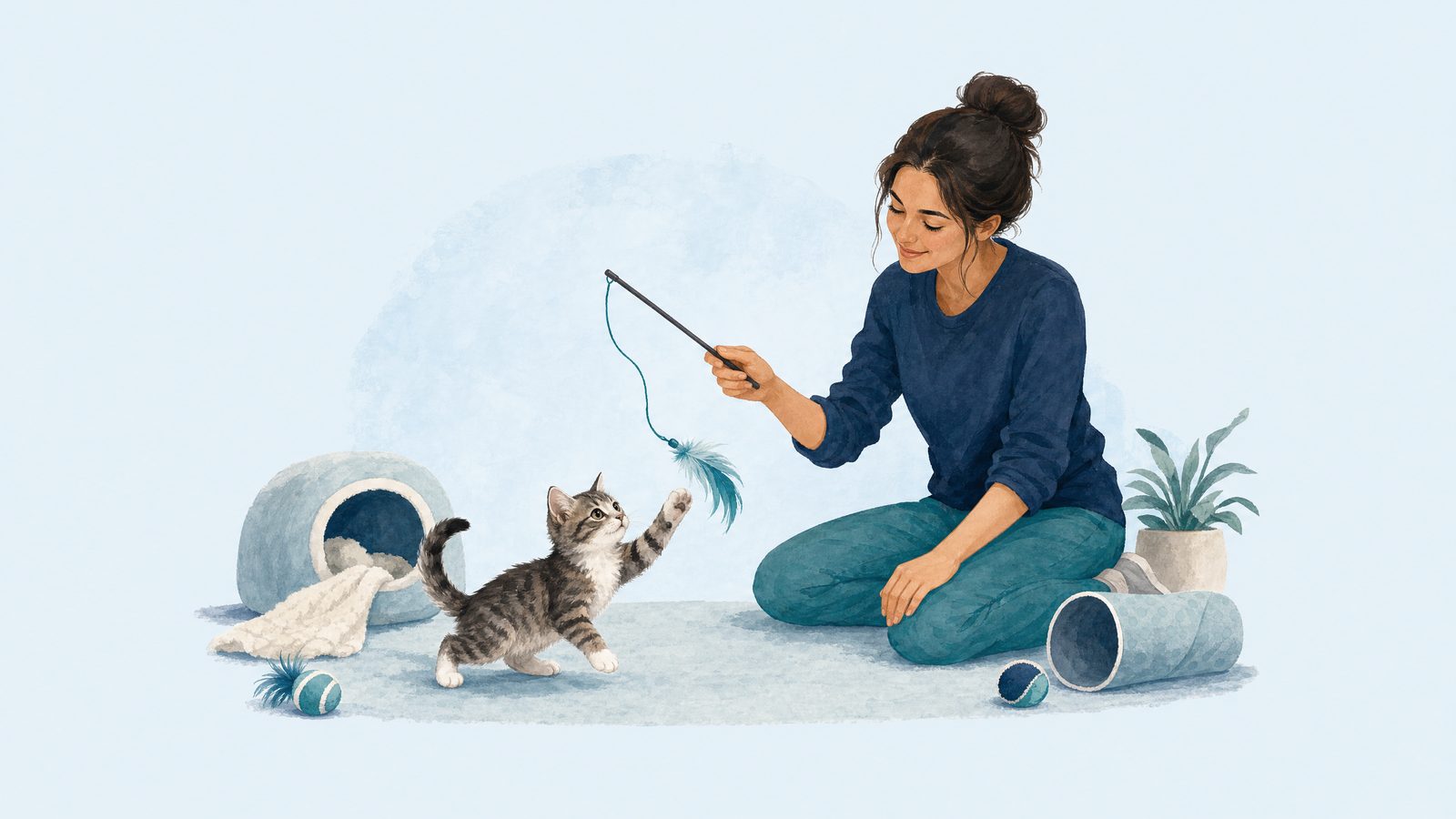
Use a suitable wand toy to imitate the movement of prey along the floor. Pause occasionally and let your kitten catch it. Keep the toy away from faces and avoid encouraging high, uncontrolled leaps onto hard surfaces.
Use toys rather than hands or feet as targets. A tiny kitten's playful bite can become an uncomfortable habit as the cat grows. If play becomes too intense, pause and offer a different activity instead of punishing the kitten.
Try a rolling game
Some kittens enjoy chasing a lightweight ball or bringing a toy back. Roll it a short distance on a safe surface and let the kitten decide whether to follow. Choose an object too large to swallow and check it for loose parts.
You can rotate a few toys rather than leaving everything out at once. A familiar toy may become interesting again after a break. Observe which movements your kitten prefers instead of assuming every cat likes the same game.
Make a safe exploration space
A sturdy cardboard box can offer a hiding place or a simple tunnel. Remove staples, tape and loose pieces that might be chewed off. If using a paper bag, remove the handles and supervise so the kitten cannot become caught.
Avoid loose string, yarn, elastic bands and ribbons. Wand toys with cords should be put away after supervised use. These materials can cause serious problems when swallowed, even if they seem like harmless craft supplies.
Keep sessions manageable
Offer short sessions and allow rest. A kitten should be able to walk away or retreat to a quiet place. Teach children to move toys gently and to leave a sleeping or hiding kitten alone.
Food puzzles may be another option when they are suitable for the kitten's age and diet. Count food used in play as part of the daily amount and begin with an easy puzzle so it does not become frustrating.
Notice changes
A sudden loss of interest in play, unusual tiredness, pain or a change in appetite deserves veterinary advice. Do not try to exercise a sick kitten into feeling better. For a healthy kitten, adjust the game to their size, confidence and stamina; the purpose is an enjoyable activity, not a performance or a target number of minutes.