
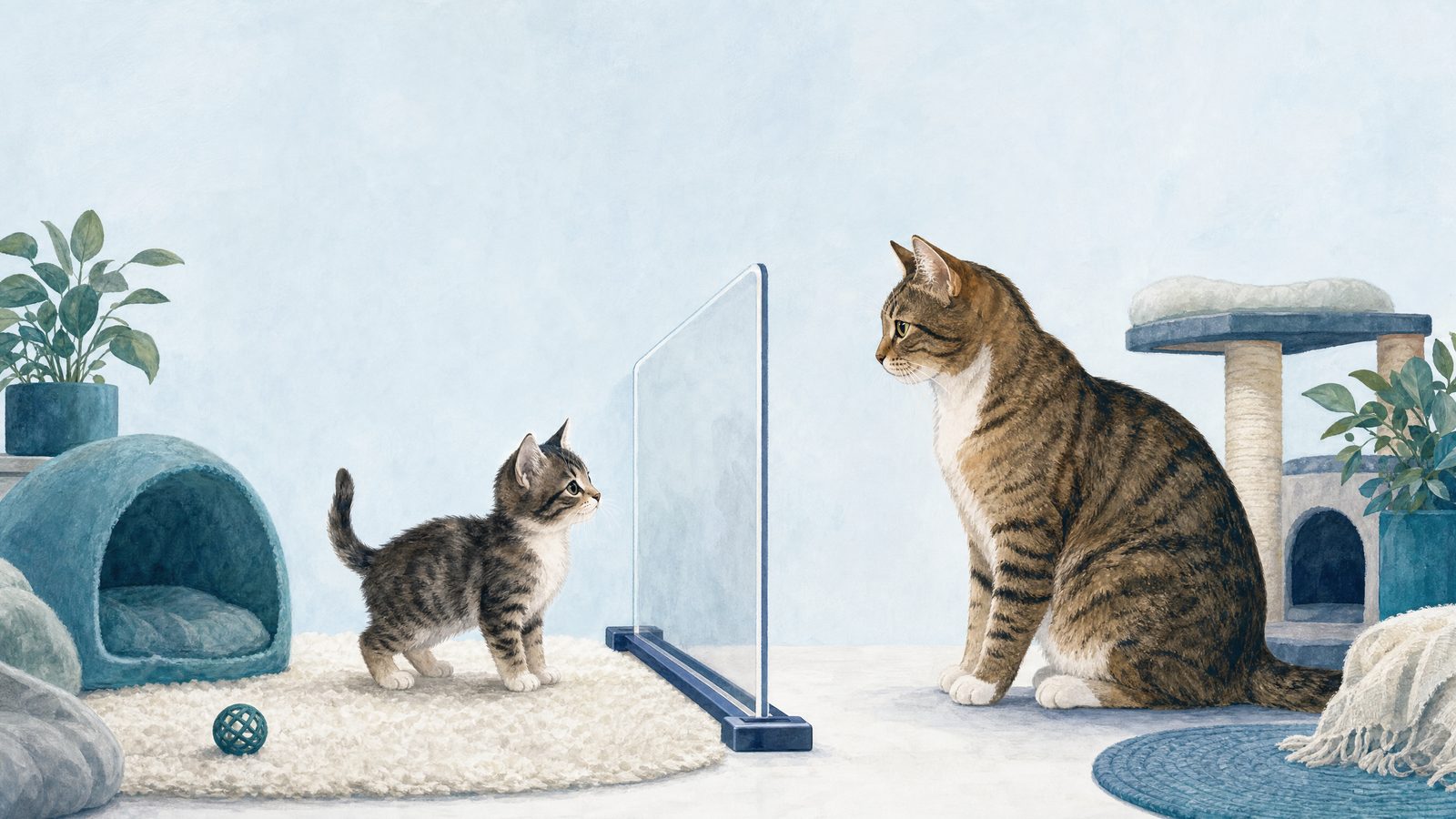
A gradual introduction gives both cats a chance to feel secure. The goal is comfortable coexistence, not an immediate friendship. Plan around their behavior rather than a deadline for letting them share the whole home.
Begin with separate resources
Prepare a quiet room for the newcomer, with food, water, a litter box, a resting place and places to hide. Keep the resident cat's familiar resources available elsewhere. Arrange a veterinary check and ask about testing, parasite care and any initial separation needed for health reasons.
Avoid placing the new cat directly in front of the resident cat on arrival. Travel and an unfamiliar home are already a lot to process. Give each cat time to eat, rest and explore without being approached by the other.
Introduce scent gradually
Once the health plan allows it, exchange bedding or other familiar items so each cat can investigate the other's scent without a direct meeting. Let them choose whether to approach. Do not rub items on a cat that finds handling stressful.
You can also allow separate exploration of shared spaces while the other cat is securely elsewhere. Keep these sessions calm and return each cat to a comfortable area. There is no need to force progress after a set number of days.
Use controlled visual contact
When both cats are comfortable with the earlier steps, introduce brief visual contact through a secure barrier. Pair the experience with something each cat enjoys at a distance where they remain relaxed. Make sure neither can climb over or squeeze through unexpectedly.
Watch for staring, crouching, chasing attempts or inability to settle. If either cat becomes tense, increase distance or return to an earlier step. A difficult session is a reason to slow down rather than keep them together until they work it out.
Supervise shared time
Keep early meetings short and provide escape routes. Do not hold cats face to face or corner one in a carrier for the other to approach. Separate them safely if tension builds; do not put your hands between fighting cats.
Continue providing multiple feeding, drinking, toileting and resting locations so one cat cannot control access to everything. Let calm, repeated experiences guide the length of shared sessions.
Get help when needed
Some introductions take much longer than others. Persistent chasing, blocking, hiding, reduced eating or toileting changes deserve advice from your veterinarian or a qualified feline behavior professional. A workable home is one where both cats can rest and use their resources without fear, even if they never choose to sleep together.