
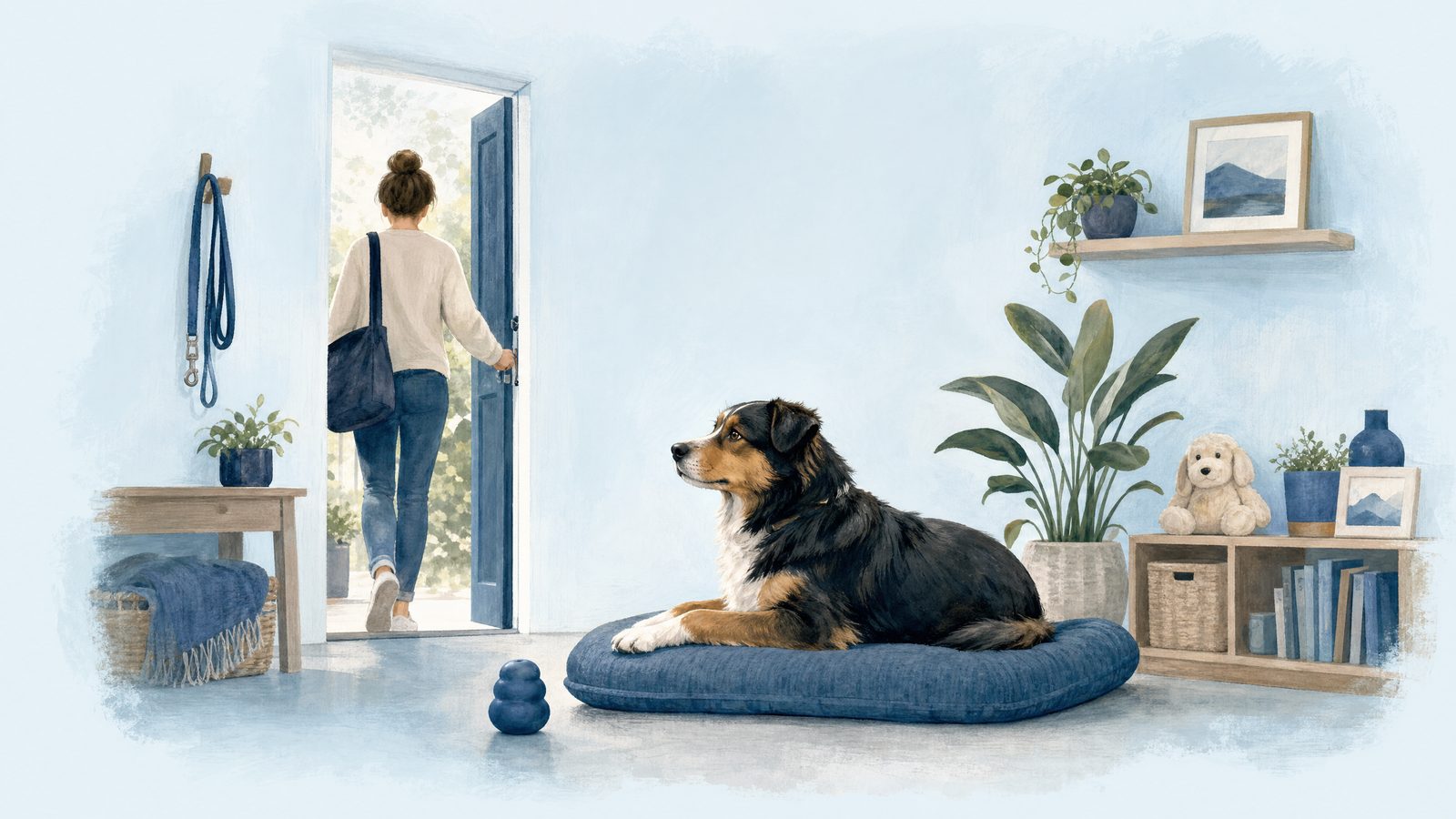
A dog that panics when left alone needs support, not punishment. Barking, pacing, destruction or toileting during an absence can have several causes. A veterinarian can help distinguish separation-related distress from medical problems, unmet needs or other behavior issues.
Observe without provoking panic
A recording of what happens during an ordinary absence may reveal signs you do not see while at home. Note how soon they begin and whether your dog settles. Do not deliberately prolong distress just to test how long your dog can endure it.
Tell your veterinarian about recent changes in routine, household members or the home. Also describe sleep, appetite and behavior when people are present. Separation problems are not proof that an owner has failed or that the dog is acting out of spite.
Reduce difficult absences where practical
During treatment, arrange support that helps prevent repeated episodes of panic. A trusted caregiver may be useful if the dog is comfortable with that person. Daycare suits some dogs but can be stressful for others, so match the arrangement to the individual.
A crate is not a universal solution. A panicking dog may try to escape and be injured. Discuss a safe setup with the professional guiding the plan rather than increasing confinement when distress becomes worse.
Build tolerance gradually
Behavior work often involves very small, manageable steps that keep the dog below the point of distress. Departures and cues such as picking up keys may need separate practice. The pace should follow the dog's response, not a fixed timetable.
Reward-based methods and careful observation help identify progress. Avoid punishment, startling devices or leaving the dog to cry until exhausted. If a step produces anxiety, the plan may need to become easier.
Meet everyday needs
Appropriate exercise, comfortable rest and enrichment can support wellbeing, but they are not guaranteed cures for separation anxiety. A food puzzle may help a relaxed dog occupy time; a distressed dog may be unable to use it.
Ask your veterinarian about evidence-based options, including whether prescription treatment or a veterinary behavior referral would help alongside behavior work.
Track realistic progress
Record the duration and conditions of comfortable absences, along with setbacks. Improvement may be uneven. Share the record with your veterinarian or qualified behavior professional so the plan can be adjusted.
Seek help promptly for self-injury, escape attempts or severe distress. The aim is to help the dog feel safe during manageable periods alone, rather than simply stop the noise that people can hear.