
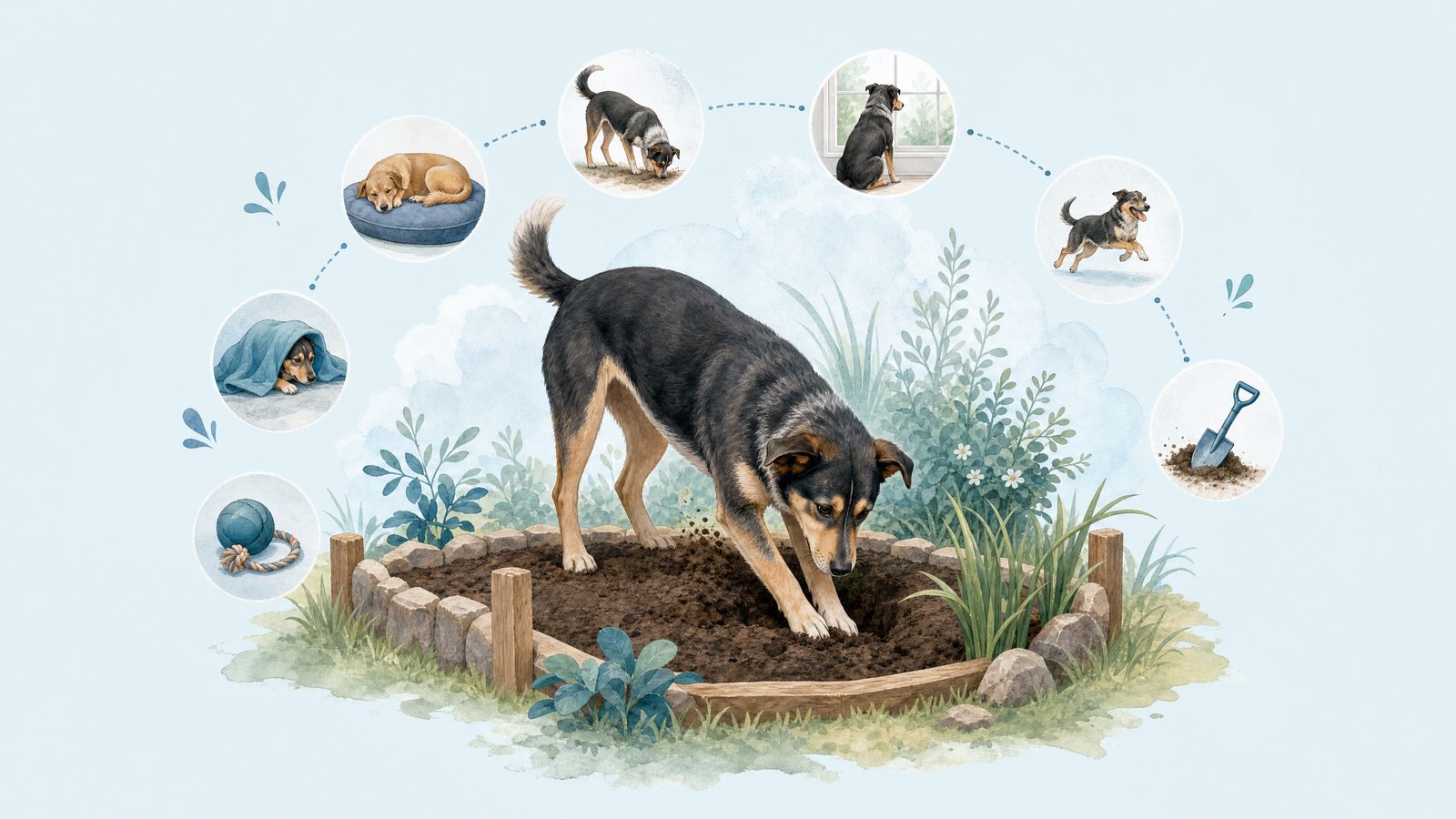
Digging can be normal canine behavior, but it becomes a problem when it damages a garden or creates an escape route. Start by asking what the dog is getting from the activity. A plan that meets that need is more useful than filling the same hole every day.
Look for a pattern
Note where and when digging happens. A dog may investigate scents, pursue small animals, seek a cooler resting place or occupy itself when alone. Some dogs are especially interested in digging because of their individual history or breed tendencies.
Digging near a boundary can also be an escape concern. Check fencing and supervise outdoors while you work out the cause. Do not rely on the fence being intact yesterday; a small gap may become larger quickly.
Offer appropriate activity
Regular walks, sniffing opportunities, play and reward-based training can provide useful outlets. Match activity to your dog's age and health instead of assuming an exhausting run will solve the problem.
Rotate safe toys and choose enrichment your dog actually enjoys. Supervise unfamiliar toys and remove damaged pieces. Time together matters too: leaving a dog alone in the yard for long periods does not necessarily meet their social or exercise needs.
Consider a permitted digging area
For a dog that enjoys digging, a designated patch or suitable sandbox may offer a practical outlet. Encourage interest there with safe toys and reward use. Keep the surface free of hazards and supervise while the dog learns the arrangement.
Protect areas that are off limits with physical management rather than punishment after the event. A dog cannot reliably connect a later scolding with a hole made earlier. Redirect calmly when you are present and reward an alternative activity.
Address weather and wildlife safely
Provide a comfortable environment, fresh water and protection from unsuitable temperatures. A dog digging to escape heat needs relief from the conditions, not simply more entertainment. Bring the dog indoors when outdoor conditions are unsafe.
If burrowing wildlife is attracting attention, seek humane advice and avoid poisons or traps that could injure pets. Check the area for hazards before allowing access again.
When digging signals distress
Digging accompanied by frantic escape attempts, persistent barking or other signs during an absence may be part of separation-related distress. An exercise plan alone may not address that problem. Speak with your veterinarian or a qualified behavior professional.
Keep a brief record of changes you try and their effects. Successful management may mean safer boundaries, more suitable activities and a permitted digging place rather than eliminating every expression of a normal behavior.