
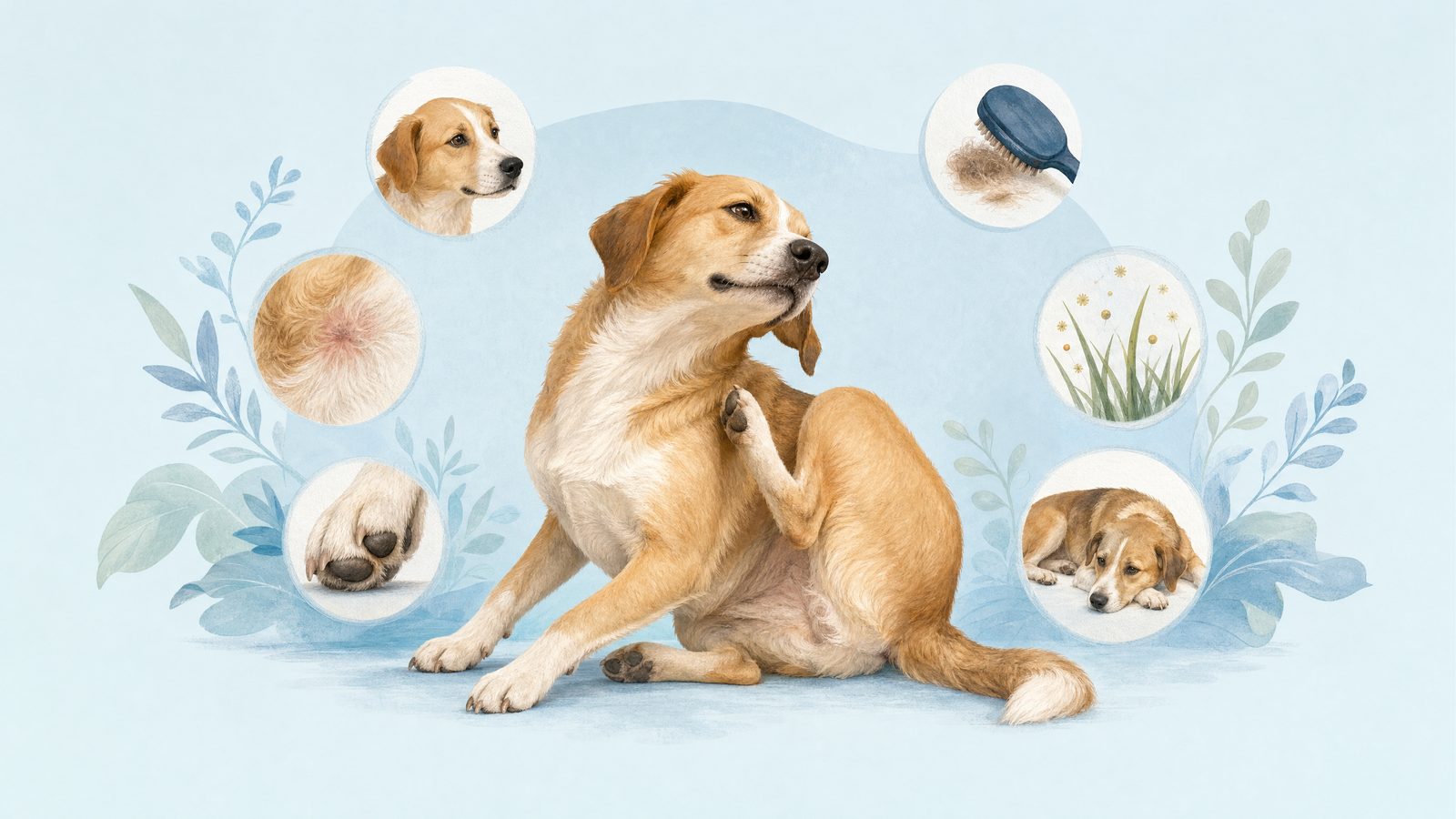
An occasional scratch is different from itching that interrupts sleep, play or eating. Repeated licking, chewing or rubbing can damage the skin and leave a dog uncomfortable. Finding the reason is more useful than cycling through anti-itch products.
Look at the whole pattern
Notice where your dog scratches and when it happens. Paws, ears, the belly and the area near the tail may provide different clues, but location alone is not a diagnosis. Record any odor, discharge, scabs, hair loss or redness.
Ask whether the problem began after a grooming visit, a new product or a change in routine. Take photographs and note whether other pets or people are itchy. Those observations can help the veterinarian decide what to investigate.
Parasites are one possibility
Fleas, mites and other parasites can cause irritation. Some are difficult to see, and not finding a flea does not rule out flea-related disease. Let your clinic know which preventive product your dog uses and whether doses have been missed.
Do not combine parasite products or use a treatment meant for another species without advice. Your veterinarian can recommend the right examination and treatment for your dog and discuss whether other animals in the home need attention.
Allergies and infection
Environmental or food allergies can contribute to itching. Bacterial or yeast problems can accompany inflamed skin and make discomfort worse. Different conditions can look alike, which is why testing and an examination may be more useful than another shampoo.
Avoid trying to diagnose a food allergy through an improvised series of ingredient changes. A structured diet trial needs a clear plan, including treats and flavored medicines. The site's allergy guides explain those distinctions in more detail.
When to arrange an appointment
Contact the clinic when itching persists, recurs, disrupts normal activity or causes skin damage. A rapidly spreading wet patch, substantial pain, swelling or illness needs prompt advice. Ear symptoms also deserve attention rather than being treated as ordinary body itching.
Do not force a close inspection of a painful area. Prevent additional licking if your veterinarian recommends a comfortable way to do so, and avoid applying oils or human creams that your dog may swallow.
Help the plan work
Follow prescribed products and timing, and ask when to report a lack of improvement. Keep a simple itch diary rather than relying on memory. Fewer nighttime scratches, better sleep and less chewing are useful observations to share, even before the coat has fully recovered.